rosawyer
 Slavery in the Northern Neck – not our finest hour! See, as follows here, the actual experiences of an enslaved man, James Lindsay Smith, who fled for refuge and lived to tell the world of his experiences.
After leaving life as an enslaved child in the Northern Neck, James Lindsay Smith worked as a shoemaker, became a minister, and helped build institutions for Black education and community life in Massachusetts and, later, in Connecticut. Reverend Smith reflects on the many events that occurred during the tumultuous times preceding and following the Civil War in his 1881 autobiography.
“We want earnest laborers amongst us, for those who are instructing my people are few and far between; and we have been deprived of education by the hand of slavery and servitude, which has been brought upon us by the slaveholder. I feel it is the duty of the people to take up our cause and instruct wherever they can.”
His identity and commitment to helping Black families grew from family ties, spirituality, and the injustices of slavery. The Northern Neck’s isolation deepened his confinement, while its close community gave him emotional grounding and introduced him to faith traditions that shaped his spiritual leadership and later activism. Smith became a respected figure whose life moved from enslavement to leadership.
The hardship he suffered in his youth gave Smith a moral compass that shaped his later ministry and activism. A summary of James Lindsay Smith’s autobiography further highlights his life.
| Learning Box – As Published |
| Summary The autobiography of James Lindsay Smith is a thoughtful and reflective collection of memories spanning from childhood to adulthood. His writing provides meaning to his life and describes how it shaped his identity. |
Birthplace and Early Life in the Northern Neck
Smith was born enslaved in or near Heathsville, Virginia, in the Northern Neck peninsula. This rural region shaped his earliest memories of family, labor, poor conditions, suffering from a broken leg, and punitive harm by slave owners. Moving between properties, sometimes hired out or working as a ship’s cook, Smith experienced both confinement and support from the tight-knit enslaved community. Early experiences with faith and hardship in the Northern Neck later shaped his ministry and activism.
The young Smith was sold to a ship captain, worked as a cook for the captain, and was severely mistreated to the point of attempting suicide. Still in his teens, Smith was tormented on many occasions as the ship made its way to Richmond, Fredericksburg, and Cater’s Creek. While the boat was being repaired in Carter’s Creek, he ran away and made his way back to Heathsville by boarding a boat of his former owner, Mr. Mitchell.
| Learning Box – Slavery & Mental Health |
| This was a field of study in early Psychiatry, called Black Psychosis … Is suicide a reflection of deficient Mental Health or are there other justifications? “Live free or die” … “Give me liberty or Give me Death”! “Live Free or Die” is the official state motto of New Hampshire, meaning that life is not worth living without liberty and it is better to die than to submit to tyranny. “Give me liberty or give me death” – Virginian Patrick Henry‘s is famous for his March 23, 1775, speech to the House of Burgesses (the legislative body of the Virginia colony) at the start of the Revolutionary War for Independence. Hara-kiri – Honor Code Only? Textbook definition is suicide “performed by the Japanese Samurai warriors to restore honor, avoid capture, or atone for failure.” There is the historicity of “2 Diplomats returning to Japan” in a German submarine – Germany was Japan’s Ally in WW II – they committing suicide upon learning of Germany’s unconditional surrender. |
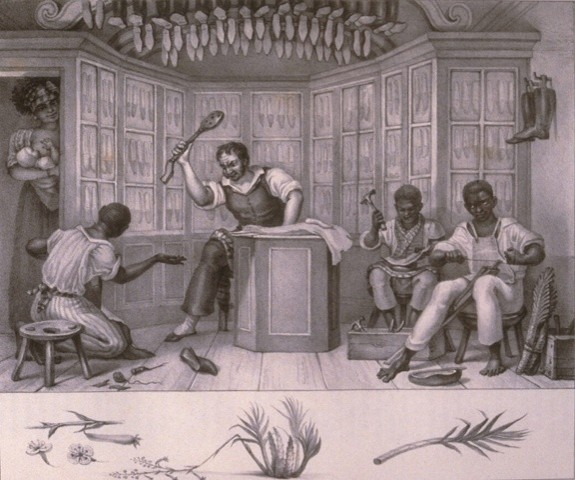
At the Mitchell farm, Smith worked in the corn and cotton fields every day and resolved to find a way to rest on Sundays. He pretended to be lame and not profitable for the family. He was sent to Fairfield to work for his master’s uncle and began to learn about the shoemaker’s trade. Smith was eventually hired out in Heathsville and learned the skills to succeed in shoemaking, carpentry, and field work, which later became the economic foundation for his life in the North.
During this time, Smith sought salvation, found a Prayer Meeting in Fairfield Church, became a Christian, and organized meetings for his community members and became an exhorter. At times, enslaved families were confronted by patrollers who forbade their own meetings. At Fairfields the white Christians held meetings that lasted eight days and nights without stopping. The black members were allowed to meet next to the door and have their own meetings.
Smith describes the wretched conditions of male slaves and compares their treatment as worse than that of cattle. He explains that enslaved black women were suffered much more and that the heartbreak of the many family ties broken by the cruel hands of slavery.
By 1838, Smith and two companions had plans to run away. These plans were affirmed while they visited a friend in Lancaster County. Shortly after returning home, Smith decided to escape with his friend Zip, who had been sold to a trader in Georgia. Together with another young man, they traveled by sailboat from the Coan River across the Chesapeake to Frenchtown, Maryland.
| Learning Box – Underground Railroad |
| Give me liberty or give me death. It is gravely serious! For many Runaway Slaves, the options were “to get to the North-Star destination or die trying”. Historians estimate that the Underground Railroad helped approximately 100,000 enslaved people escape to freedom between the late 18th century and the end of the American Civil War. |
The Escape to Safety through the Underground Railroad and a New Life of Freedom
Smith traveled with his friends from Frenchtown to New Castle, where they parted for a time because he could not keep up with their pace. Upon arriving in New Castle, they regrouped and embarked on a ship bound for Philadelphia. In Philadelphia, his friends went on to board a ship bound for Europe, and Smith began to look for a place to work and sleep. Smith found a shoemaker who provided him with refuge in his home when he learned that Smith was a fugitive. The shoemaker went on to meet with the Abolitionist to plead Smith’s case, where they decided to send him to Springfield, Massachusetts. As described in the National Park Service Handbook about the Underground Railroad, he was given two letters to allow for safe passage to New York and to Springfield.
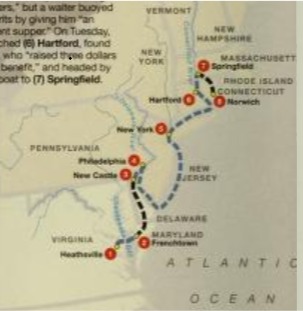
In Springfield, Massachusetts, Smith was greeted with open arms by a pastor of a large Presbyterian church. He helped Smith find employment with another Abolitionist at a wholesale shoe store. He saved funds, enrolled in a school, and continued to work to pay for tuition and board. While attending school, Smith was licensed to teach the Gospel. He and a fellow minister, along with several “ardent and active workers, for there were no timid drones,” created the Sabbath School in the home of Cecilia Platt.
“Through the aid of the Presbyterians, this school was organized; and, opening with five scholars, the number increased to twenty, and then to one hundred. A small library was procured. A lady aged ninety years, who attended the school, learned to read the Bible, and the perusal of its sacred pages was a great comfort to her.”
Over time, the growth of the Sunday School, Smith and his coworkers found the need to build a Chapel. Building the Chapel led to revivals and precipitated enthusiastic interest from the faithful, “making the meetings a power of good.” The benevolent works of the Sewing Society also led to several more churches being built.
Smith went on to do anti-slavery lectures for a year in parts of Connecticut and other communities in Massachusetts with his friend, Doctor Hudson, an abolitionist. During that time, they encountered many hostilities and were turned away from several venues but otherwise had remarkable success.
“When the Doctor was through, I took the stand and before I had finished my talk, took all the fight out of them; some of them wept like children; so, you see that it changed those men’s hearts towards us, for a sympathetic feeling seemed to pervade through their hearts. I made many friends for myself that night. I heard one of them say that “if my master came there after me, he would fight for me as long as he had a drop of blood in him.” There were no more mobs in Torringford after that.”
When Smith completed his travels with the Doctor in 1842, he returned to his boot and shoe work in Springfield. In Springfield, Smith also proposed to and married Emeline Pratt, a young lady he met during his four years in Massachusetts.
Smith moved with his wife to Norwich and set up his boot and shoe shop. He was forced to move his shop due to fire and eventually relocated to Bath Street. As he established his business, Smith formed partnerships with wholesale shoe dealers to do custom work. With proceeds from his business, Smith was able to buy and pay off a mortgage for his first home. As his family grew, Smith sought and procured a larger home, with great difficulty. During this time, he was persecuted for being a homeowner.
“While many would be encouraged for their industry and toil, my people are subject to all sorts of abuse for buying desirable homes for their families. We were in Norwich when colored voting men were not allowed to attend the High School that was kept for young men on School Street.”
In Norwich, Smith began his ministerial practice at Union Church, where he performed sermons for both Methodist and Presbyterian congregations. Both societies had a share in the Church and eventually split due to irreconcilable differences. Smith went on to work with the Methodists to organize and build a Methodist Church, start a Sabbath school, and form a Young Men’s Christian Association. During the great rebellion, the Sabbath school ended, the young men disbanded to respond to the country’s call, and the church suffered many obstacles. Remaining ever hopeful, Smith was ordained a deacon by the New England Conference and later appointed as the Local Deacon. Smith eventually was overcome with infirmities that led to a decline in his pastoral duties. The Church became dilapidated and was passed on to another organization.
Smith also shares how he read and learned about Africa. He recalls meeting a native of Africa and knowing of others who emigrated to Africa while he lived in Springfield. He describes many cultural and life experiences of Monrovia, Liberia, as it was shared by his friends. While Smith is genuinely interested in the promises of Africa, he acknowledges the continued efforts of the Slave Trade from there.
| Learning Box – Back to Africa??? |
| Remember Liberia … Liberia began in the early 19th century as a project of the American Colonization Society, which fomented the emigration of Black Americans from the US.[11] Between 1822 and the outbreak of the American Civil War in 1861, more than 15,000 freed and free-born African-American, along with 3,198 Afro-Caribbean, relocated to Liberia.[12] But with the Berlin Convention of 1884, there was evidence that the Europeans were NOT done with their exploitation of the African Continent. Therefore any movement to Go Back to Africa came to a trickle! |
Civil War Reflections and Post-War Work
Smith shared concerns about the impending war, the war’s progress, emancipation, and the meaning of freedom. In his observations about Black soldiers and the shifting landscape, Smith examines how the fall of Fort Sumter in 1861 was the first stage of the failure of slavery in America. Even as the Civil War ended, he acknowledges that the Northern army still held disdain for Black soldiers.
“The Northerners, eager for glory and greedy for honor in that eventful hour disdained the proffered service of the colored man and would not even permit him to drive a wagon in train of their army; and even more, would not allow him to wear the cast-off clothing of their soldiers for fear the imperial blue of this great republic would be dishonored by them, and perverted from a sacred purpose.”
| Learning Box – No Negroes with Guns |
| To be Black in the America of those days, one “could not win, could not break-even and could not get out of the game”. There was no neutral destination in America. The optimal option was the only option, to work towards the end of slavery. For this reason many Blacks wanted to join the war effort when the war started in 1861, even though it would be at a great sacrifice to themselves and their community. But there was a real fear among White America that they could not arm Black People. So Blacks were disallowed. As Americans died…on both sides (365,000 total dead [4] on the Union side; 260,000 total dead on the Confederacy side), the spilled blood was by a vast majority of White people. As many died, their surviving family members assigned blame to those of the Black community, as depicted here: In July 13 – 16, 1863, African Americans on the New York City’s waterfront and Lower East Side were beaten, tortured, and lynched by white mobs angered over conscription for the Union war effort. [20] These mobs directed their animosity toward blacks because they felt the Civil War was caused by them. … These events led to the eventual inclusion of Black Soldiers. |
Smith continues to describe the circumstances that circumvented the moves by the Northern army to take Richmond, the ramifications of the losses that occurred on their first and second attempt to defeat the South. He further explains how the North was induced into creating Black regiments in the military when President Lincoln declared the Emancipation Proclamation in January 1863. Smith also highlights the bravery of the 52nd Regiment, Massachusetts Colored Volunteers. Nearly half were injured or dead when they charged up a bayou five times. But not for the belief in their inalienable rights to freedom and refusal to be re-enslaved did they want to give up.
The war continued until 1865, when Richmond was taken by a band of Black soldiers, and Lee surrendered. Smith discusses how these events were overshadowed by the death of President Lincoln.
“Our rejoicing was turned into mourning: the whole country was draped in mourning; every eye was dimmed with tears. Pen cannot begin to describe the sadness; deeply, the people felt the loss of one whom they loved as a father. The American Nation has lost a pure patriot, humanity, a tried friend, freedom, and a great champion. He was stricken down at the time when his great wisdom was so much needed in bringing his distracted and blood-drenched country into the harbor of returning peace and prosperity.”
Smith pays tribute to Senator Sumner, who was an adamant proponent of the Civil Rights bill, and cites Sumner’s last request to colleagues not to let it fail. He unequivocally shares his thoughts on the standard bearers for their devotion as constant as truth, unwavering justice, fidelity to the cause, and beacons of light for freedom.
| Learning Box – A Race to the Bottom |
| Which was worse? Dred Scott or the Fugitive Slave Act? The Dred Scott decision ruled in March 1857 that Black people (enslaved or free) were not citizens of the US and Congress could not ban slavery in federal territories.The Fugitive Slave Act was a federal law passed in September 1850, by Congress to mandate the capture and return of escaped enslaved people to their owners, even from States that disallowed slavery. Remember the narrative of “12 Years a Slave”. |
Smith remembers the terror inflicted by the Fugitive Slave Law on the hearts of the many survivors after it was passed. Very many people were taken back and Smith lived with this fear every day. After freedom was proclaimed throughout the country, Smith made a concerted effort to visit Heathsville.
“News spread like wildfire that Lindsey Payne (for that was my name before I escaped from slavery) had returned home again. Many of my old friends who once knew me came flocking in to see me. My listeners were never weary, as I related to them the history of my life in the North and described the varied scenes through which I had passed. My joy and excitement rose to such a height that I scarcely knew whether I was in the body or out.”
After the passage of the Civil Rights Bill in 1866, Smith saw the condition of Black Americans ameliorated in many instances. However, he also acknowledges the awful destruction of life, loss of housing, occupants stripped of property, and the many who suffered malice and vengeance. He himself had just one brother and two sisters that remained from what was once eleven siblings.
| Learning Box – Infant Mortality |
| Why have 11 children if you’re poor and enslaved? Answer: Many do not survive. This old practice was actually an economic strategy for couples to survive Old Age; the many children would be able to leverage caregiving roles among themselves. With a high infant-mortality rate, there was the need to hedge the risk with a few more children – an “heir and a spare” many times over. |
Smith returned to Heathsville many times, carrying boxes of clothing and a tightly packed trunk for the benefit of formerly enslaved people and their families. During one of his last visits in 1879, he visited Fairfield, where he learned his former mistress passed. The great house burned to the ground, and the former corn and wheat fields were covered with thick forest. He remembers and gives thanks to his friends in Norwich for their generous gifts.
In conclusion, Smith notes the momentous changes that occurred between 1867 and 1879, most notably the passage of the 15th Amendment and the call from Black Americans in Norwich for a celebration. The celebration took place on June 16, 1870, which included a thoughtful speech by the Honorable Charles L. Remond. Remond presents the most important incidents that led to the cause for celebration.
“His theme was: ‘The Advancement of the Colored People.’ He referred to the present condition and future prospects of my people. Every word was sparkling, brilliant, convincing, and touching, and received with great applause. His speech was full of thoughts that breathe, and words that burn, and was listened to with marked attention and interest.”
Smith fondly remembers this event as one that touched his people’s hearts and that will long be remembered as one of the greatest and brightest events that occurred during his life. He explains his life was not one of bold events, nor does it represent a hero. It is rather a real story that is earnest that intends to touch “simple heart that has power to sympathize with the unfortunate in times of adversity, and to mingle in the joys that come to the after-life, giving peace and satisfaction to the soul…,”and the lived experiences of those about which the public has a right to know, to inform a greater cause or be linked to the progress of humanity, thereby affecting destiny. Smith’s writings move the reader to think about the implications of slavery. He acknowledges that even though nominal freedom, Black Americas are still in peril and suggests that open hearts and willing hearts are still necessities. While they have much to ask of others, they still have much more to accomplish.
Smith continues with stories of colored men during the Civil War and highlights the determination garnered with learning the use of arms and the willingness to sacrifice their lives. Yet even as masters were away at war, slaves had the power to kill those left in their care and did not do so. Instead, they cared for the families and remained loyal and trustworthy. As the war progressed, many soldiers were nursed by slaves, and when well, returned to the Army. Slaves who were offered freedom to join the Confederate army would not do so unless their families were freed, as well.
“The slaves were of great assistance to the Union army on account of their thorough knowledge of the country: its ways and resources: its wood, water, fuel, game, and of the habits of the enemy. Nothing escaped them. They’d tell today what happened yesterday, thirty miles off; they would risk their lives to give any information which was to be of advantage to the Union.”
| Learning Box – Honor Code – Buffalo Soldiers |
| No equal pay! Yet still, they fought! During the Civil War, as in any war, soldiers get paid. But the societal defects of racism was so acute in the US that even this administrative action was fraught with dysfunction; the encyclopedic reference relates: The enlisted men of the 54th Regiment Massachusetts Volunteer Infantry were recruited on the promise of pay and allowances equal to their white counterparts. This was supposed to amount to subsistence and $14 a month.[22] Instead, they were informed upon arriving in South Carolina, the Department of the South would pay them only $7 per month ($10 with $3 withheld for clothing, while white soldiers did not pay for clothing at all).[23] Colonel Shaw and many others immediately began protesting the measure.[24] Although the state of Massachusetts offered to make up the difference in pay, on principle, a regiment-wide boycott of the pay tables on paydays became the norm.[25] |
Smith makes several other observations about heroic acts by soldiers, other families, formerly enslaved people, and slaves during this war. He describes the arrival of Black people in Washington and the hospitality of Washingtonians after the Rebellion ended. He observes a large number of formerly enslaved people leaving their homes and heading West, many of whom were stranded with money. Many women and children who were suffering were driven out of Maryland and sought refuge in Washington. With these issues at hand, Smith was astutely aware of the need to educate freemen and the many new schools in the South built to advance their education. He notes that the more he contemplates the condition of his people, the more he is convinced that it is the beginning of the end, but not the end yet.
| Learning Box – Take-a-way: Reconciliation Not Revenge |
| An eye for an eye … … this the standard for Judeo-Christion societies. The Nazi’s exterminated 6 million Jews during World War II. When the Jews finally established their own homeland – Republic of Israel in 1948 – they immediately established the Israeli Defense Force (IDF) to guard again future threats. But they also went after past Bad Actors. They immediately organized to avenge the fallen by pursuing – to bring to justice – all surviving Nazi War Criminals – many times exacting extra-judicial sentences: assassination. No one complained. African-descended people in the New Word – despite enduring their own Holocaust – never pursued this strategy. They only wanted reconciliation, not revenge! |
Art imitating life …
… there have been a number of movies that have depicted these lived experiences.
| Learning Box – Hollywood meets Antebellum Virginia |
| Do you want to better understand the context … and see the portrayals alluded to in this post? Then see these movies: 12 Years a Slave Harriet Glory |
Sources:James Lindsay Smith Autobiography
Official National Park Handbook: The Underground Railroad