rosawyer
 Summary
Captain Hansford C. Bayton (1863-1927) rose from a post-emancipation childhood in Essex County, Virginia, to become a prominent maritime entrepreneur and civic leader along the Rappahannock River. Capitalizing on opportunities available near the end of Reconstruction, he owned and piloted numerous vessels, secured contracts to deliver mail and newspapers, and operated passenger excursions. Bayton also earned respect across Black and White communities through his business, church, and public service in Tappahannock and White Stone, Virginia. As Hansford built his successful maritime business, he also purchased Lawson Bay Farm in White Stone to make it a home for his family. His achievements unfolded amid mounting racial segregation, political exclusion, and oppression under the Jim Crow system. Fires, unsuccessful investments, debt, and the systematic erosion of Black economic opportunity eventually undermined the prosperity he built. Bayton’s life illustrates the possibilities of Black advancement after emancipation, the forces that constrained it, and the promise of a better future and life for his children and grandchildren.
| Learning Box – Rivers: Watery Super-Highway |
| America industrial evolution can be narrated by its primary Means of Transport. Today that Super-Highway is the Interstate System i.e. I-95, I-75, etc – built after World War II. Before this – circa Civil War – the Railroad emerged to dominate the transportation ecosystem. But the original Super-Highways were the waterways, rivers and lakes. These were the blood vessels that powered the early economy of Colonial America and post-Revolution America. In fact, the earlier impactful cities were all established at the mouths of the major navigable rivers. Consider: Boston – St James River New York – Hudson River Philadelphia – Delaware River Baltimore – Chesapeake Bay Chicago – Lake Michigan / Illinois River cut to the Mississippi or Connected cuts to the St Lawrence River then out to the Atlantic. Jacksonville – St John River Miami – Miami River / Biscayne Bay New Orleans – Memphis – St Lous – Mississippi River Kansas City – Omaha – Sioux Falls – Missouri River |
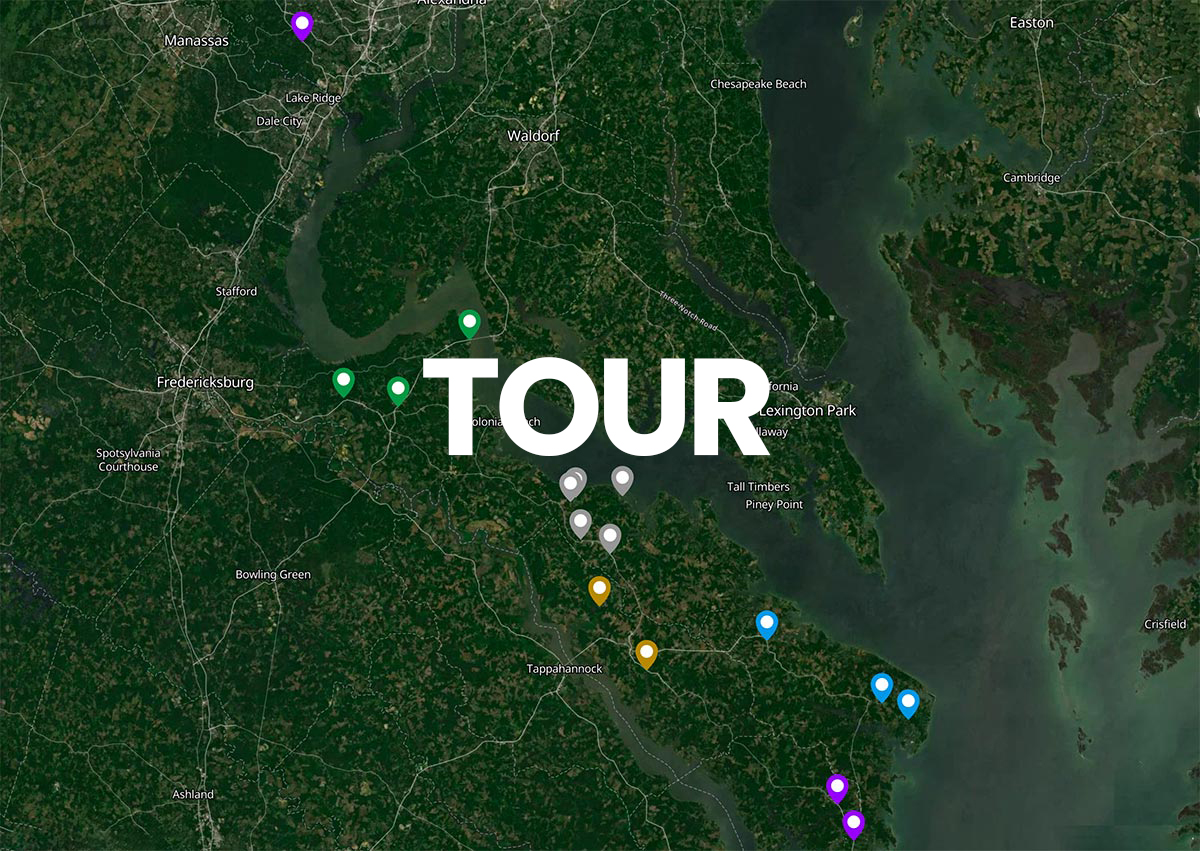
| The Northern Neck is a peninsula bordered by the Potomac River to the North, the Rappahannock River to the South and the Chesapeake Bay to the East. |
The Birth of an Extraordinary Gentleman
Captain Hansford Bayton was a Black Virginian who rose to extraordinary success during the post-Reconstruction era. He demonstrated leadership, unity, and civic engagement through community activism and local government positions, as well as piloting numerous vessels. He also suffered hardships and losses, just as many Black lives, businesses, and families were systematically unraveled by civil turmoil and oppression during this period of American history. Bayton’s story is woven together with the historical and political context from the late 1800s to the 1900s. He lived through Reconstruction, when constitutional amendments expanded African Americans’ rights and the Freedmen’s Bureau provided support, and then witnessed the rise of Jim Crow and the subsequent decline of Black prosperity in the Northern Neck.
| Learning Box – Freedmen’s Bureau |
| The Bureau of Refugees, Freedmen, and Abandoned Lands, usually referred to as simply the Freedmen’s Bureau,[1] was a U.S. government agency of early post American Civil War Reconstruction, assisting freedmen (i.e., former enslaved people) in the South. It was established on March 3, 1865, and operated briefly as a federal agency after the War, from 1865 to November 1872, to direct provisions, clothing, and fuel for the immediate and temporary shelter and supply of destitute and suffering refugees and freedmen and their wives and children. The Bureau was intended to last for only one year after the end of the Civil War.[5] The Bureau became a part of the United States Department of War, as Congress provided no funding for it. The War Department was the only agency with funds the Freedmen’s Bureau could use and which had an existing presence in the South. Headed by Union Army general Oliver O. Howard, the Bureau started operations in 1865. From the beginning, its representatives found its tasks very difficult, in part because Southern legislatures passed Black Codes that restricted movement, conditions of labor, and other civil rights of Black Americans, nearly replicating the conditions of slavery. Also, the Freedmen’s Bureau only controlled a limited amount of arable land.[6] … The Bureau’s powers were expanded to help Black Americans find family members from whom they had become separated during the war. It arranged to teach them to read and write—skills considered critical by the freedmen themselves as well as by the government.[7] Bureau agents also served as legal advocates for Black Americans in both state and federal courts, mostly in cases dealing with family issues.[7] In 1872 Congress abruptly abandoned the Freedmen Bureau program, refusing to approve renewal legislation. It did not inform General Howard. One of the biggest accomplishments of the Bureau was in the education arena. In fact, a school-college-university was eventually established to provide the Freedmen a functional education. General Howard was a founder of the eventual University. He served as President of the university from 1869 –74. Today, that institution – Howard University – is one of the premier HBCU’s in the country. |
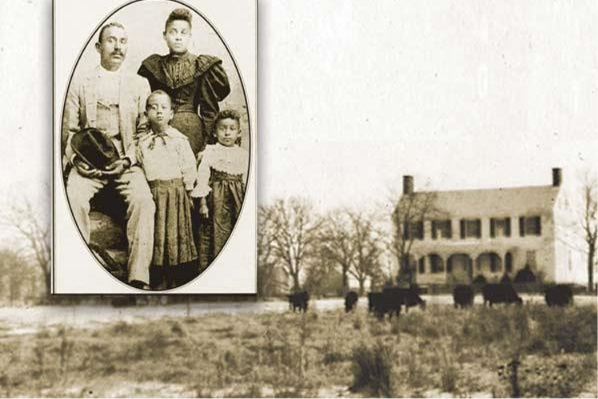
Captain Bayton was born in October 1863 to interracial parents in Essex County, Virginia. Julia, his mother, was enslaved on a plantation, and his father, surnamed Dow, was a member of the Powhatan. The Emancipation Proclamation was issued that same year Hansford was born, and the 13th Amendment to abolish slavery was signed in 1865. Soon after, Julia married Arthur Bayton, and Hansford took his stepfather’s surname. Although little is known about Hansford’s childhood, his stepfather was a self-made, established farmer and carpenter. Arthur Bayton was admired and respected within Tappahannock’s small African American community. His work as a farmer and carpenter created opportunities for his family, including access to education. Hansford’s childhood was idyllic and shaped by determination and faith. By 1870, the Bayton household included Hansford and four other children.
Just as Arthur Bayton played an active role in civic, business and church life, Hansford “was determined to find the means and resources to chart his own future and destiny,” sometime in 1881. Hansford Bayton left the family farm to become a waterman. His life as a waterman and maritime entrepreneur on the Rappahannock River was entwined with life in Tappahannock, White Stone, and other fishing communities on either side of the river. He became an election judge in Tappahannock and by age 31 he was appointed one of five trustees governing the town. His civic leadership and entrepreneurship demonstrate his competence and ability to build relationships and navigate the brief opportunities Reconstruction created for Black political participation and business ownership—opportunities later sharply curtailed by Jim Crow laws.
Post-Reconstruction and the Rise of a Maritime Entrepreneur
Hansford Bayton’s story emerges from the layered history of Virginia’s northeastern Tidewater region of Essex, Middlesex, and Lancaster Counties. English colonists from York, Indigenous peoples with deep roots in the area, and West Africans brought to Virginia to cultivate tobacco beginning in the 1650s all shaped the world into which Bayton was born. Along the Rappahannock River, port and fishing towns developed to support nearby residents and farms, making the river central to the region’s economy and daily life.
In 1886, Hansford married Virginia “Vergie” Banks, the daughter of John and Lucy Banks and a descendant of predominantly free African Americans with lineage to the Banks name from the early 1700s. The young couple lived in a small house next to Arthur Bayton’s home on Duke Street. Hansford and Virginia had eight children, two of whom passed away at a very young age due to the lack of available medical care. They were members of Berean Baptist Church, where he “would become Superintendent of the Sunday School and participate in debates and other events and presentations.”
| Learning Box – Reconstruction vs Redemption | |
| Reconstruction | Redemption |
| This period in US history that followed the American Civil War (1861–1865) and was dominated by the legal, social, and political challenges of the abolition of slavery and Federal control over, and reintegration of, the former Confederate States into the United States. Three amendments (13th, 14th and 15th) were added to the US Constitution to grant citizenship and equal civil rights to the newly Freed Slaves. Throughout the war, the Union was confronted with the issue of how to administer captured areas and handle slaves escaping to Union lines. The US Army played a vital role in establishing a free labor economy in the South, protecting freedmen’s rights and creating educational and religious institutions. In 1867–68, the Radical Republicans enacted the Reconstruction Acts over President Johnson’s vetoes, setting the terms by which former Confederate states could be readmitted to the Union. Constitutional conventions held throughout the South gave Black men the right to vote. New state governments were established by a coalition of Freedmen, supportive white Southerners, and Northern transplants. | All the Reconstruction initiatives were opposed by “Redeemers” who sought to restore white supremacy and reestablish Democratic Party control of Southern governments and society. So the end of Reconstruction … was followed by a period that White Southerners labeled Redemption, during which White-dominated state legislatures enacted Jim Crow laws and, beginning in 1890, disenfranchised most Blacks and many poor Whites through a combination of constitutional amendments and electoral laws. The White Democrat Southerners’ memory of Reconstruction played a major role in imposing the system of white supremacy and second-class citizenship for Blacks. Despite the fact that 3 constitutional amendment were added to ensure that the Reconstruction initiative were permanent, the former Confederate States circumvented these by imposing poll taxes and literacy tests and sought to intimidate (through violence) and control the Black population and discourage or prevent them from voting.[2] Sourced from Wikipedia. |
By 1891, political instability had fueled a populist movement that increasingly marginalized the African American community. However, Hansford continued to move toward financial success. Even as the Ku Klux Klan targeted people who benefited from Reconstruction, Bayton positioned “himself as an active civic leader and aspiring entrepreneur.” In doing so, he developed a strong rapport with Black and white Americans. Hansford established himself in the black community while also organizing events for the broader community. As a “new conservative stronghold” squeezed out the gains of integrated coalitions in Essex County, Hansford sought an opportunity that would lead him to move to Lancaster County to become a noteworthy steamboat pilot.
In 1895, Captain Bayton became the joint owner of the Owen Dillard, a 39-foot-long passenger vessel, together with his partner Walter E. Dillard. Hansford crewed the Owen Dillard with his half-brother, James A. Bayton. That same year, the Fredericksburg Freelance Star announced that Bayton and Dillard planned to establish daily service aboard the Owen Dillard between Fredericksburg and Layton. Dillard eventually opted out, and Bayton bought out his partner’s share of the business. While the passenger and freight route proved slow, Captain Bayton realized the potential to establish a mail boat service for Lancaster County. He sought out business community members with a proposal to provide mail service and newspaper delivery to Middlesex and Lancaster Counties. Shortly thereafter, he was awarded the route.
An unfortunate turn of events caused by the Supreme Court ruling in the Plessy vs. Ferguson lawsuit legitimized racial segregation during this period of Hansford’s life. “This ruling would forever affect not only Hansford Bayton and his work, but also hundreds of thousands of other Black people who sought economic autonomy.” This ruling limited the hopes and dreams of many Black Americans and also meant that Hansford would have to deliberately straddle his business to serve both White and Black clientele. Nonetheless, Captain Bayton became the first Virginian and African American to ferry mail between various wharves in Lancaster and Middlesex Counties six days a week. His steamboat primarily traveled to Irvington, Weems, Merry Point, Millenbeck, and Urbanna.
Captain Bayton’s rise exemplifies Black economic achievement in post-Reconstruction Virginia. Despite limited opportunities in the Middle Peninsula and Northern Neck, he built a successful maritime enterprise and acquired a small fleet of steamboats. He secured contracts to deliver mail and newspapers and operated passenger and excursion services across Chesapeake Bay.
Hansford Bayton’s success represented more than wealth and economic independence. It led to Bayton’s renowned social standing and political influence. He became an active member of the Christian Church, taught Sunday School, and became a beloved fixture within the Black community. He also served as an election judge, became a town trustee in Tappahannock, and was a respected figure in the Black and white communities. Bayton’s powerful debating skills were also quite extraordinary. At two large gatherings—one at Queen Esther Baptist Church and the other at Hartfield Baptist Church—audiences heard Bayton and fellow debaters consider the question, “Does morality increase with civilization?”
Bayton’s greatest achievement was his talent and abilities as a businessman who became the first Virginian and first African American to establish and maintain a boat mail service, newspaper delivery, and passenger excursions on the Rappahannock River for Middlesex and Lancaster Counties. Through determination and maritime business skills, Bayton became pilot and owner of multiple vessels, including the Owen Dillard, a 39-foot steamboat; Dr. Newbill steam launch; Dr. W.J. Newbill, an 85-foot screw steamer; and Grace, a 41-foot deadrise.
Life in White Stone and Lawson Bay Farm
Captain Bayton purchased the 169-acre farm from Lewis Cockrell in 1901 for $3,550 and paid off the debt by 1903. The house, together with the land, was an extraordinary purchase for a person of color. Captain Bayton’s purchase of the 169-acre Lawson Bay Farm was extraordinary for a Black man of his time. His acquisition highlighted the potential for Black families to become landowners of property once held by English gentry, including the Lawson family. Lawson Bay Farm was part of patented tracts of land, owned by Rowland Lawson, on the Rappahannock River between Cherry Point and Mosquito Point in Lancaster County. Before Bayton acquired the farm, ownership had passed from Bettie Lee Lawson to Richard H.F. Payne. Unable to repay his debts, Payne was forced to auction Lawson Bay Farm, which Littleton Cockrell purchased in 1883. The losses of his boats and debt forced Captain Bayton to sell Lawson Bay Farm and move into a rental home in nearby Taft in 1915.
In 1905, he sought investors to support the building of the new Dr. W.J. Newbill. In 1907, the Dr. W.J. Newbill was reserved for exclusive use during the 300th anniversary of Jamestown. “The Jamestown Exposition, one of many such fairs and expositions that were popular in the early 1900s, was a major event that dignitaries from the state and visitors from around the country would attend.”
Despite the loss of his son, Dewey, in 1907, Hansford continued to tend to his business and piloted the Rosedale, a 1700-seat capacity steamboat, on an excursion from points on the Rappahannock River to Old Point, Jamestown Exposition, and Norfolk. The occasion, Georgia Day, on June 10, 1907, featured President Theodore Roosevelt. President Roosevelt opened the exposition in April and returned on June 8 to deliver a speech at the George Building in Norfolk, Virginia. That same summer, Hansford saved a little girl who had fallen off the pier in Weems. As reported in the Northern Neck News, the young girl’s father nominated Bayton to receive a medal from the Carnegie Hero Fund. Throughout much of that summer, Dr. W.J. Newbill carried excursion passengers, helping Captain Bayton expand and sustain his business. When summer ended, Dr. W.J. Newbill was available for a series of excursions and to assist with loads carried out by the Owen Dillard. The Grace was the last boat he used to deliver mail from Morattico to Wellfords Wharf and Tappahannock. By 1925, Bayton had become ill. Following protocol at that time, Bayton wrote to the Second Assistant Postmaster General requesting that his check be sent to his wife to cover his expenses while his sons continued delivering mail from Morattico to Tappahannock.
While Captain Bayton delivered mail and newspapers, the news of a race riot caused by a debt owed, ensuing arson, and shootings by Black and White residents occurred in a town not far from the Northern Neck. Newspaper articles published during this time fault the education of African Americans as a sign of the deterioration in race relations.
What Bayton’s Life Teaches Us
By 1910, Bayton lost three steamers to fires, the Owen Dillard, Dr. Newbill, and Dr. W.J. Newbill. Despite the hardships he suffered from these losses, Hansford continued to seek other financial opportunities. He signed an agreement to purchase oysters farmed from Lawson Bay. That effort became a loss because the oysters were of poor quality, and the owner had a second lien on the oyster shore. Even though Bayton obtained an injunction, he suffered the loss. Unable to recoup those losses, he turned to door-to-door sales to make ends meet and was eventually forced to sell Lawson Bay Farm in 1915. Even as he and Vergie moved into a small rental house nearby, the unpaid debts accumulated over the next few years.
| Learning Box – Limiting Black Success in a society committed to maintaining White Power |
| Haiti – After a successful Slave Revolt in 1791, the formerly enslaved people of Haiti had to continually fight one onslaught after another from the Great Powers of France, United Kingdom and United States. Finally in 1804, a settlement was reached with France in which the New Black Republic would be allowed to peacefully exist but they were burdened with massive debt to repay their former enslavers for the “lost property”. The other countries imposed Trade Embargos and economic insurrections at many opportunities. In fact, the United States never recognized Haiti as a Free Republic … until 1954. See the aligning VIDEO in Appendix B below. |
| Redemption – Most attempts at Black Townships were disrupted and undermined. Some Urban Centers of Black Excellence – i.e. Tulsa, Bronzeville (Chicago) and Harlem – were systematically disenfranchised by blatant (sometimes violent) assaults and subtle opposition. |
| Barack Obama – The Senate Republican Leader, Mitch McConnel of Kentucky, was resolute in his opposition of the administration of the First Black President Barack Obama. He declared: “single most important political goal of the Republican Party was to make Obama a [failed] one-term president”. See aligning VIDEO in Appendix C below. |
Captain Bayton penned letters between 1921 and 1925 to the U. S. Postmaster seeking to continue his mail route despite his ailing condition. He describes his twenty-seven-year commitment with an unprecedented level of mail delivery. His sons maintained the route from Morattico to Tappahannock while Hansford was hospitalized. Due to Hansford’s failing health, he and Vergie moved to their daughter Julia’s home in Baltimore in 1926. Hansford died on July 27, 1927, and is buried in the family plot in Tappahannock in the Northen Neck.
Hansford Bayton stands at the intersection of three forces: the economic freedom and security he fought to build, the effects of racial segregation and oppression designed to destroy that freedom, and the collapse of Reconstruction that removed every protection he once had. His story is not simply about a man who owned boats; it shows how he learned to navigate “between the competing interests of his White and Black customers for excursions” while prioritizing mail delivery. Hansford’s business thrived in a “highly charged environment, as lynchings and systematic assaults affected Black communities. It is also about the limits of Black success in a society committed to maintaining White Power, and the extraordinary courage required to keep rebuilding in the face of relentless destruction.”
Against the Tide – the book – demonstrates the rise of prosperity and the closing of continued economic opportunity for Hansford. His story also reveals the consequences of Jim Crow, specifically, the wearing away of Black American’s voting rights, restricting access to public office, intensifying segregation, and escalating vigilante violence against Black communities. Bayton’s political and economic achievements became increasingly untenable in a society determined to restore racial hierarchy. His economic decline was not a personal failure; it resulted from a political system designed to dismantle Black progress. Bayton’s life is a Northern Neck narrative, a Chesapeake narrative, and an American narrative—one that reveals how freedom was pursued, threatened, and ultimately constrained in the decades after emancipation.
| Learning Box – The Other Societal Defect: Crony-Capitalism |
| Crony-Capitalism is defined as when public policy is hijacked to benefit private parties. This societal defect can short-change the future for immediate gains, or profits. This is far too common in the US; many times, the only color that matters is “green”, the color of money. So the American Dream is often a nightmare, even for White Americans. Think of the example of closing domestic factories to exploit cheaper labor in foreign lands, or universal health mandates, just to increase retailers’ profits. With this defect, public monies may be diverted to private pockets; think bribery, kick-backs, extortion and other cases of corruption. Just “follow the money” is a constant refrain among Conspiracy Theorists investigating Crony-Capitalistic instances. It’s irrefutable: so many times, “where there is smoke, there is fire”. |
Against the Tide: The Turbulent Times of a Black Entrepreneur, written by Julia H. Sullivan, the great-granddaughter of Hansford Sullivan, and published by the Steamboat Era Museum in Irvington, Virginia. Museum visitors will also find an exhibit and tribute to Captain Hansford C. Bayton.
Sources:
Sullivan, J. H. Against the Tide: The Turbulent Times of a Black Entrepreneur. 2nd ed. Irvington, VA: Steamboat Era Museum, 2023.
Steamboat Era Museum, Annual Report, 2023.
Robison, Robby. The Lawsons of White Stone and Lawson Bay Farm: 1650 to Present Day. Heathsville, VA: Northumberland Historical Press, 2020.
****
Appendix A VIDEO – Animation of Captain Hansford piloting a Steamboat.
Narration:
https://captain-hansford-c-bayton-steamship-operations-le.ai.studio
“Born in eighteen sixty-three on the shores of Essex County, Virginia, Hansford C. Bayton rose from a post-emancipation childhood to become one of the most remarkable Black maritime entrepreneurs in American history. He earned his federal master pilot credentials and commanded a fleet of steamships on the Rappahannock River. His flagship — the Lady of the Lake — carried United States Mail, daily newspapers, and passengers across forty-five miles of tidal waters. In eighteen ninety-three, he won competitive federal star-route mail contracts. In eighteen ninety-eight, he purchased Lawson Bay Farm in White Stone — eighty-five acres of tidewater land, a private dock, and a sanctuary for his family. His triumphs unfolded against the mounting hostility of the Jim Crow era. Yet through every tempest, Captain Bayton endured. His legacy — a beacon of Black self-determination, land ownership, and community service — lives on in the waters of the Rappahannock.”
Appendix B VIDEO – The Debt That Crippled Haiti for 122 Years – https://www.facebook.com/reel/1079000741520180
They tell you Haiti is poor. They don’t tell you why.
In 1825, France sent 14 warships and forced Haiti to pay 150 million francs for its own freedom. Haiti paid until 1947. This is the debt that crippled a nation for 122 years.
#Haiti #HaitianHistory #BlackHistory #TheyNeverTaughtYou #DrivenbyPurpose
Youtube Nov 12, 2014 – Senator Mitch McConnell clamps down on his statement that “The single most important thing we want to achieve is for President Obama to be a one-term president”.
Appendix C VIDEO – Senator Mitch McConnell – GOP goal for President Obama” – https://youtu.be/YT1JV65rokc?si=LjsSTAl_TsfcezgV