rosawyer
The Elizabeth Key story is a classic tale about the people, places and practices of the Northern Neck of Virginia. There is surface considerations for this story and there are deeper perspectives.
Let’s go deep with this Essay!
A Northern Neck Story
The Northern Neck of Virginia — the peninsula between the Potomac and the Rappahannock — is remembered for planters, courthouses, and the birthplaces of presidents. It should be remembered just as firmly for a young woman named Elizabeth Key Grinstead, who in 1656 stood in a Northumberland County courtroom at Coan Hall and asked the colony to admit what its own laws and its own faith already implied: that she was a free Englishwoman.
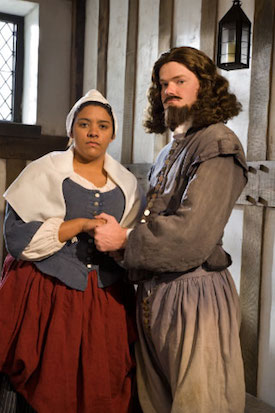
Elizabeth was the daughter of Thomas Key, a White English planter and Burgess, and of an enslaved African woman whose name the record did not trouble to keep. She was baptized into the Church of England. She was bound out as a servant for a term of years, not sold for life. When that term was exceeded and her status was challenged, she sued for her freedom — and won, with the help of her attorney and later husband, William Grinstead.
Her case rested on two claims rooted in the Northern Neck’s own legal and religious soil. First, partus sequitur patrem: under English Common Law, a child’s condition followed the father, and her father was a free Englishman. Second, her baptism: Christians, by long custom, were not to be held as perpetual slaves by other Christians. The General Assembly reviewed the case and the verdict stood. Elizabeth Key was free.
| Learning Box – Partus Sequitur Patrem |
| Why do you have your Father’s surname instead of your Mother’s surname? This is the etymological premise. o The Actual Term: The established legal doctrine is partus sequitur ventrem, which translates from Latin to mean “that which is brought forth follows the womb” (or literally, “offspring follows the belly”). [1, 2] o The Altered Term: Changing ventrem (womb/mother) to patrem (father) flips the meaning entirely. Partus sequitur patrem would mean “offspring follows the father.” |
That the victory happened here in the Northern Neck matters. Coan Hall was not a distant metropole; it was a county seat on a tidewater creek, where neighbors judged neighbors. For a moment, a Northern Neck Courtroom applied English Law and Christian custom to an African-descended woman without flinching. The Northern Neck is therefore the place where Colonial Virginia’s conscience was tested and, briefly, held.
The Law That Answered Her
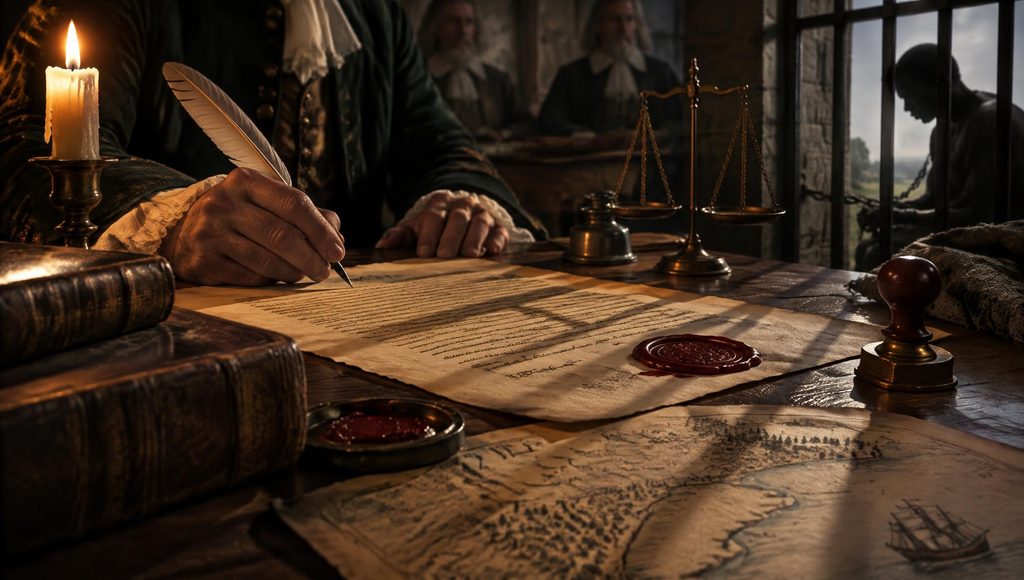
The Colony’s answer came in 1662. The Assembly enacted that “all children borne in this country shall be held bond or free only according to the condition of the mother” — reversing the English rule of paternal descent precisely where it would have freed children like Elizabeth. In 1667 it added that baptism did not alter a person’s bondage. Two doors, both of which Elizabeth had walked through, were nailed shut behind her.
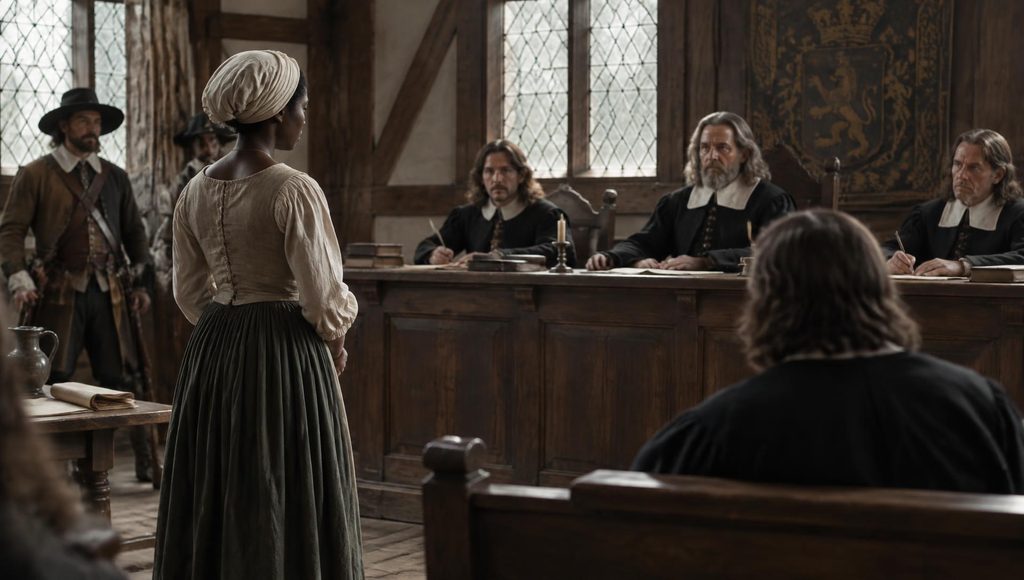
This was not drift. It was legislation written with her case in view. Where the Common Law inherited from England said a child follows the father, Virginia wrote a rule that made the enslaver’s paternity profitable rather than perilous. The man who fathered a child in bondage now enlarged his estate instead of endangering it. Cruelty was converted into an asset class.
| Learning Box – Time to Double-Down |
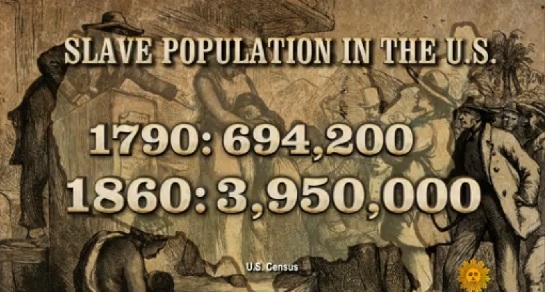
| In 1662, the Colony of Virginia made the definitive decision to double-down on slavery. They wanted more, not less. In 1776, Virginian Delegate to the Continental Congress, Thomas Jefferson, was tasked to write the Declaration of Independence from Great Britain. He penned: We hold these truths to be self-evident, that all men are created equal, that they are endowed by their Creator with certain unalienable rights, that among these are life, liberty and the pursuit of happiness. As this Declaration went back to England, the home country laughed and scoffed at the blatant hypocrisy of these words, as America was believed to be holding (a little less than) 694,200 African-descended-people in the bonds of slavery at that time – out of a full population of 3,893,635. In England, there was a movement towards liberalism and libertarianism at this time. The government hired John Lind, an English politician and pamphleteer, to write a rebuttal to the declaration. He wrote Answer to the Declaration of the American Congress, a reply that tried to pick apart the Declaration of Independence. Lind focused on the issue of slavery, saying that the colonists were actually angry that King George III had offered freedom to the slaves. Lind mocked the writers for stating, ‘All men are created equal…’, yet they allowed slavery. Another of the respondents to the US Declaration of Independence was the philosopher and statesman Jeremy Bentham. Jeremy Bentham (1748-1832) was a British philosopher, jurist, and social reformer. He is regarded as the founder of modern utilitarianism. Bentham became a leading theorist in Anglo-American philosophy of law, and a political radical whose ideas influenced the development of welfarism. He advocated individual and economic freedom, the separation of church and state, freedom of expression, equal rights for women, the right to divorce, and the decriminalizing of homosexual acts. He called for the abolition of slavery, the abolition of the death penalty, the abolition of physical punishment, including that of children, and animal rights. Though strongly in favor of the extension of individual legal rights, he opposed the idea of natural laws/natural rights [as flawed moral basis for slavery and oppression of women and minorities], calling them “nonsense upon stilts”. Jeremy Bentham advocated for the Greater Good as the preferred community ethos; this is ‘the greatest good to the greatest number of people which is the measure of right and wrong”. So he urged America to be better and do better towards its slave population. They did not! After winning the war for Independence against Britain, the new United States of America doubled-down in the practice and pursuit of slavery, especially in the southern States. |
The Religious Violation
This Essay asks a hard question: does God punish children for the sins of the father? The Hebrew Bible does not give a single tidy answer, and honesty requires saying so.
o Deuteronomy 24:16 is unambiguous as a rule for human courts: “Fathers shall not be put to death because of their children, nor shall children be put to death because of their fathers. Each one shall be put to death for his own sin.” Ezekiel 18 presses the same point until it cannot be missed: “the son shall not suffer for the iniquity of the father.” These are instructions to judges and magistrates — to exactly the sort of men who sat at Coan Hall and in the Assembly at Jamestown.
o Exodus 34:7 speaks differently, of God “visiting the iniquity of the fathers on the children… to the third and the fourth generation.”
But this is a statement about divine providence and the long shadow of communal wrongdoing — about how corruption propagates through generations — not a grant of authority to any legislature. Read as a warrant for hereditary punishment, it contradicts the explicit judicial command given to human beings.
So the religiosity of the region did not match the practice of the region. Something had to give!
Change did come – they changed the religion; kept the practice.
The 1662 Act cannot even claim the cover of that ambiguity, because it did not punish children for the sins of a parent at all. Elizabeth’s mother had committed no crime. She had been enslaved — the wrong was done to her. Virginia therefore enacted something worse than the hereditary punishment Deuteronomy forbids: hereditary punishment for being a victim. And it attached that punishment to the mother’s line specifically, so that the one party who had genuinely sinned — the man who fathered a child on a woman he owned — was the only party the law protected.
By the standard of the very scripture the Colony professed, the 1662 Act is condemned on three counts:
o It punishes the innocent for another’s condition.
o It shields the guilty from the consequence of his own act, violating the same principle from the other side.
o It makes human beings permanent chattel in defiance of the claim, foundational to both Judaism and Christianity, that every person bears the image of God — a status that cannot be inherited away.
The 1667 baptism statute compounds the offense. It took a sacrament and rendered it legally inert, so that the church could be extended to the enslaved without threatening the ledger. Faith was permitted for the soul and forbidden any consequence for the body. A religion whose founding story is an Exodus from bondage was quietly asked to guarantee the bondage instead.
Naming, Blaming, and Shaming
Responsibility is not vague. The Virginia General Assembly of 1662 wrote the Act. The Burgesses who voted for it were Anglican churchmen, sworn to a faith whose scriptures they were contradicting in the same session. Clergy who baptized the enslaved and then declined to argue that baptism meant anything are implicated by their silence; so are the vestries and congregations that found the arrangement comfortable. The Book of Revelation’s judgment on a religious order that trades in “slaves, that is, human souls” (Revelation 18:13) is not a rhetorical flourish here — it names the transaction exactly.
But the accusation here is not against religion as such. It is against the use of religion as decoration over an economy. Elizabeth Key’s own argument was religious. She did not need a reformed faith; she needed her contemporaries to mean what they already said they believed.
| Learning Box – Slavery in England? |
| Was there Slavery in England? The Colony of Virginia was part-and-parcel of British North America. How about the British themselves on the subject of Slavery? The Common Law system, based on laws established since the Norman conquest (12th Century) governing legal protections of individuals, protected those residing in England from any formal form of slavery, and a formal legal precedent against the practice, extending to those who may have been enslaved under foreign jurisdictions, was eventually established by Somerset v Stewart (1772). So any enslaved person who touched ground in England was free; but the economic matter was different … and hypocritical. The Royal African Company, a London-based trading company, had control over all trade between countries in Britain and Africa before the year 1698.[3] At this time, only ships owned by the Royal African Company could trade for anything, including slaves. Slaves were increasingly an important commodity at the time, since the British colonization in the Caribbean and the Americas in the 17th century. In the end, the British hands were not clean. |
Why the Northern Neck Should Keep This Story
There is an old adage against discussing politics and religion in polite company. It is good advice for dinner tables and poor advice for history. Elizabeth Key’s case was both at once, and the Northern Neck cannot tell it honestly as either alone.
She won her case. That is the first fact, and it deserves a Historical Marker. Her story deserves the Trail stop, and the storytelling. What a great summary:
“A Colonial Virginia Court, on this peninsula, was capable of justice.”
She was then legislated around. That is the second fact, and it is the more important one, because it shows that the injustice which followed was not ignorance. Virginia knew what justice looked like — it had just watched a courtroom produce it — and chose otherwise, deliberately, in writing, within six years.
That is the Northern Neck’s inheritance: the Courthouse where the right answer was given, and the record of how quickly a society will rewrite the question. Elizabeth Key Grinstead lived free, married, and raised children who were free with her. The law built to prevent any repetition of her victory stood for two centuries.
Both belong on this Trail.
| Learning Box – Way Forward |
| Slavery was an ugly institution. No victim deserved such treatment; no perpetrators can be justified, rationalized or excused. Today, due to the analysis of the acts and events of slavery, we have the definition and classification of Human Rights violations. There is no normalizing this villainy; and this is an apropos and contemporary discussion as slavery is not just ancient history: Saudi Arabia didn’t abolish slavery until 1962.[118] But indeed, we can still “get along“! But only after reconciliation, and that reconciliation must come with the desire to set things straight and correct the wrongs. 😐 |