rosawyer
Considering the history of the Tuskegee Airmen …
… we are so proud!
… both America in general and the Northern Neck in particular.
The story of this Tuskegee Airman begins, in a very real sense, in the quiet fields of Virginia’s Northern Neck. It was in Westmoreland County that Charles Bernard Smith (1917 – 1991) was born – a son of a region and a people who had every reason to doubt the nation’s promises, and who answered that doubt not with bitterness but with flight. Smith would go on to become an original member of the legendary 99th Fighter Squadron, the first African American unit to fly in combat. Today, a Tuskegee Airmen Historical Marker stands in Westmoreland County, a small monument to an enormous truth: that patriotism, in the hands of Black Americans, has always been an act of extraordinary faith.
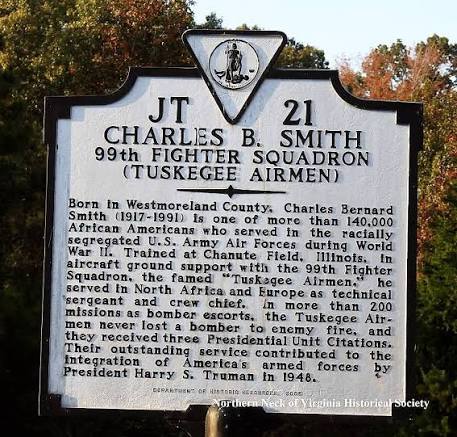
(Charles B Smith was not a pilot, but rather a pivotal part of the Ground Support Crew – a Crew Chief – more than just a cog in the wheel).
To understand what Smith and his fellow airmen gave to this country, one must first reckon with what the country had withheld from them. Two decades before Smith took to the skies, Charles Alfred Anderson Sr. – the man who would become known as the “father of Black aviation” and the chief flight instructor of the Tuskegee Airmen lived his own Virginia story. He was a young man in love with airplanes who could find no one willing to teach him. He saved his money for flying lessons, only to discover that his money was welcome but he was not. So he learned the hard way: attending aviation ground school, studying airplane mechanics, haunting airfields and absorbing whatever knowledge white pilots would let slip. When instruction remained out of reach, he bought his own plane – a Velie Monocoupe – purchased with savings and loans from friends and family. A Flying Club admitted him as a member but would not teach him to fly. Undeterred, Anderson taxied his own aircraft around the field, gunning the engine until, quite literally, he taught himself to lift off the ground and come safely back down. He earned his pilot’s license in August 1929, and in February 1932 – under the tutelage of Ernest H. Buehl, “The Flying Dutchman” – he became the first African American to receive an air transport pilot’s license.
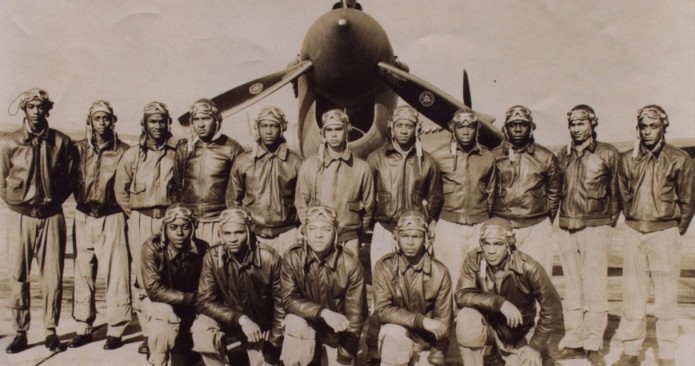
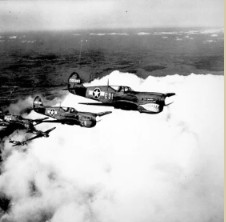
There is a particular kind of love of country revealed in a story like Anderson’s. It is not the easy patriotism of parades and anthems. It is the stubborn, generative patriotism of people who insisted on serving a nation that had not yet decided whether it wanted their service. Anderson did not merely fly; he flew for something. He partnered with fellow Black aviators to open the skies to others, making record-setting transcontinental flights not simply as personal triumphs but as demonstrations – a word that would later carry military weight – of what African Americans could do if only the door were left ajar.
That same spirit ran like a current through the Chesapeake and Potomac region. In 1940, when a group of Black aviators known as The Cloud Club was forced out of airfields in Northern Virginia by racial segregation, they did not disband. They pivoted. Crossing the Potomac to Croom, Maryland, they established Riverside Airfield – later Columbia Air Center—which became the very first licensed, Black-owned and operated airport in the United States. Exclusion, in their hands, became construction. They were denied a place in someone else’s sky, so they built one of their own. Just south of the Northern Neck, at Langley Field in Hampton, Virginia, the segregated 1st Aviation Squadron was activated in 1941 – another chapter in a regional story in which Black enthusiasm for aviation kept blooming in soil salted against it.
The hinge of this history came on April 11, 1941, when First Lady Eleanor Roosevelt visited the Tuskegee Institute. Touring the children’s hospital, she noticed airplanes overhead and asked to meet the chief instructor. She confessed to Anderson that she had always heard “Colored People couldn’t fly” – but it appeared to her that he could. “I’m just going to have to take flight with you,” she said, and over the protests of her own security detail, Anderson took her aloft. Forty minutes later, she returned to earth delighted: “Well I see you can fly, all right!” The flight became known as “The Flight That Changed History,” and it gave an unmistakable boost to the Roosevelt administration’s newly established Tuskegee Airmen Experiment – the military’s grudging test of whether Black pilots could be trained for combat.
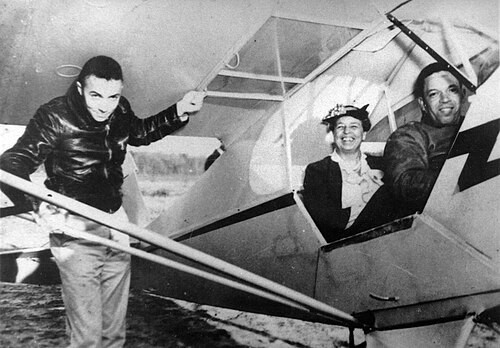
It is worth pausing on the word experiment. White pilots were never experiments. Their courage was presumed; their competence was the default. Black aviators like Anderson, and cadets like Charles B. Smith, had to prove in the air what their fellow Americans were simply assumed to possess on the ground. And they did prove it – Anderson training a generation of pioneers, including General Benjamin O. Davis Jr. and General Daniel “Chappie” James Jr., while our Charles B. Smith and the 99th Fighter Squadron carried the fight into combat itself. They flew for a country that segregated their units, doubted their minds, and in many places denied them a meal, a hotel room, or a ballot. They flew anyway.
What, then, do we call this?
“Stakeholders”?
… is almost too bloodless a word, and yet it is exact: these men and the communities behind them – the friends and family who lent Anderson the money for his Monocoupe, the neighbors of the Northern Neck, the members of The Cloud Club pooling their hopes across the Potomac – held a stake in America that America had not yet agreed to honor. Their patriotism was an investment made on faith; in a currency the nation had threatened to devalue. They loved a country that did not always love them back, and their love took the form of excellence so undeniable that the country, slowly and incompletely, was forced to change.
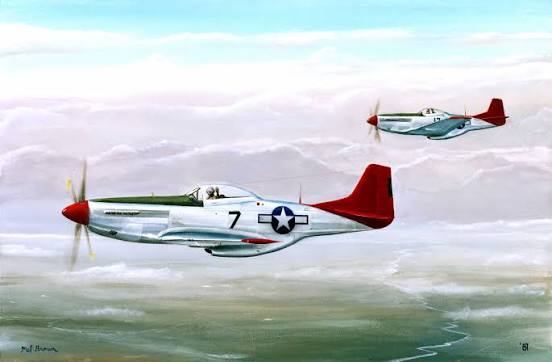
From the historical marker in Westmoreland County to the landmark in Upper Marlboro, Maryland, the traces of that love remain. They remind us that the measure of patriotism is not what a nation has done for its people, but what its people have dared to do for their nation – especially when the nation has given them every excuse to withhold their hearts. Charles B. Smith, Charles Anderson, the aviators of The Cloud Club, and all the Tuskegee Airmen gave their hearts anyway. They lifted a country heavier than its prejudices into a freer sky, and they did it from cockpits it had tried to keep them out of.
We, in the Northern Neck, are so proud of our own. We should be. But the deeper obligation is to remember what that pride cost—and who paid it.
| Learner’s Box The Inscription on the Historical Marker |
| Born in Westmoreland County, Charles Bernard Smith (1917-1991) is one of more than 140,000 African Americans who served in the racially segregated U.S. Army Air Force during World War II. Trained at Chanute Field, Illinois, in aircraft ground support with the 99th Fighter Squadron, the famed “Tuskegee Airmen,” he served in North Africa and Europe as technical sergeant and crew chief. In more than 200 missions as bomber escorts, the Tuskegee Airmen never lost a bomber to enemy fire, and they received three Presidential Unit Citations. Their outstanding service contributed to the integration of America’s armed forces by President Harry S. Truman in 1948. Erected 2005 by Department of Historic Resources. (Marker Number JT-21.) |
| Location. 38° 11.782′ N, 77° 0.336′ W. Marker is near Colonial Beach, Virginia, in Westmoreland County. It can be reached from James Monroe Highway (Virginia Route 205) 0.2 miles south of Ferry Landing ( Route 638), on the left when traveling south. This marker is located south of the baseball field parking lot. |
Eleanor Roosevelt is just a passing reference in this story.
That seems unfair …
… to the audience – as she was more than just a footnote in history. See the relevant Learning Box here:
| Learner’s Box – First Lady Eleanor Roosevelt & the Tuskegee Airmen |
| On April 11, 1941 First Lady Eleanor Roosevelt (wife of the 4-term-serving 32nd President of the US, Franklin D. Roosevelt) was touring the institute’s children’s hospital. Unaware of the flight program, she noticed airplanes flying in the air and asked to meet its chief instructor, Charles Alfred Anderson Sr., (February 9, 1907 – April 13, 1996). The First Lady solicited a 40-minute Test Flight that became known as “The Flight That Changed History”. As of then, blacks had never flown for the Army Air Corps. No doubt her experience was a boost to the Roosevelt administration, which had just established the Tuskegee Airmen Experiment to explore if it was possible to train black pilots for military service. Anderson went on to train other famous military aviation pioneers. This was not the start of Mrs. Roosevelt’s advocacy; nor was it the end. She largely redefined the role of First Ladies, which she served for 12 years from 1933 to 1945. She was widowed after her husband’s passing in 1945, but she continued to live an impactful life until her death in 1962. See these bullets of her accomplishments: o She joined and impacted the Women’s Trade Union League in 1918. o Persuade her husband to stay in politics after he was stricken with a paralytic illness in 1921. o Starting in 1933, her early years in the White House, she was controversial for her outspokenness, particularly with respect to her promotion of civil rights for African Americans. She also advocated for expanded roles for women in the workplace, the civil rights of Asian Americans, and the rights of World War II refugees. o She served as a United States delegate to the United Nations General Assembly from 1945 to 1952. o She took a leading role in designing the text and gaining international support for the Universal Declaration of Human Rights. President Harry S. Truman – her husband’s successor – called her the “First Lady of the World” in tribute to her human rights achievements.[9] 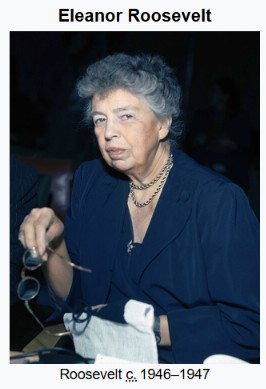 |
See this Movie except from two of the many movies that related the History of the Tuskegee Airmen – these 2 critically-acclaimed productions were from Big Hollywood Studios – informative & entertaining:
1. Tuskegee Airmen (1995) – Warner Bros – https://youtu.be/005NLPYYpwk?si=4DTrjrE0W93S8lec
<iframe width=”560″ height=”315″ src=”https://www.youtube.com/embed/005NLPYYpwk?si=4DTrjrE0W93S8lec” title=”YouTube video player” frameborder=”0″ allow=”accelerometer; autoplay; clipboard-write; encrypted-media; gyroscope; picture-in-picture; web-share” referrerpolicy=”strict-origin-when-cross-origin” allowfullscreen></iframe>
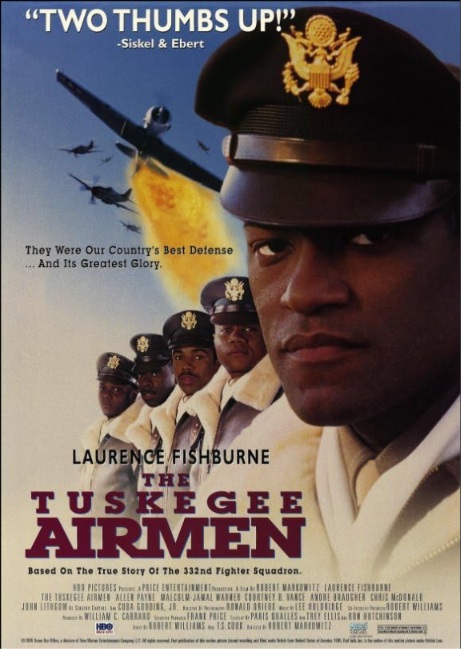
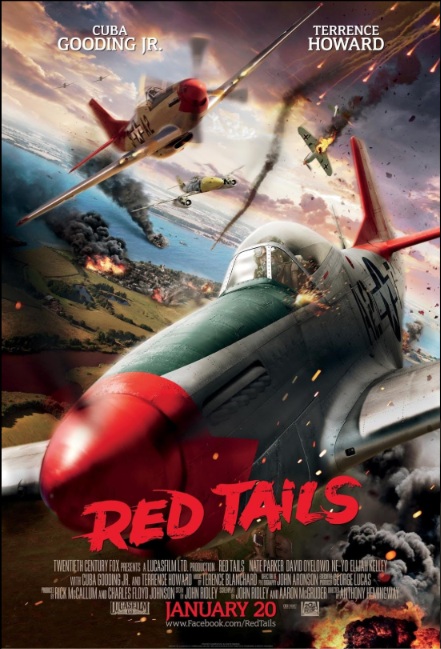
2. Red Tails (2012) – Lucasfilm (Disney) – https://youtu.be/BpA6TC0T_Lw?si=lJvWSLq9ERzLRoH2
<iframe width=”560″ height=”315″ src=”https://www.youtube.com/embed/BpA6TC0T_Lw?si=lJvWSLq9ERzLRoH2″ title=”YouTube video player” frameborder=”0″ allow=”accelerometer; autoplay; clipboard-write; encrypted-media; gyroscope; picture-in-picture; web-share” referrerpolicy=”strict-origin-when-cross-origin” allowfullscreen></iframe>
*******
Appendix Video:
Tuskegee Airman Veteran’s Westpoint Experience
https://www.facebook.com/share/v/1JmSEUTtU5/