rosawyer
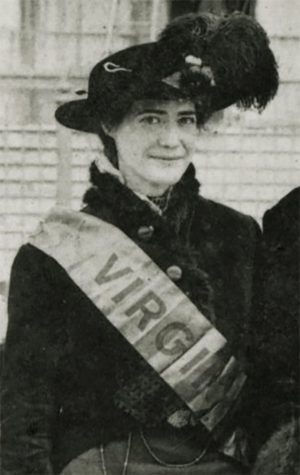
On the one hand, meet Adèle Clark – a Virginian and life-long advocate for Women Voting Rights. She had this one Battle her whole life.
On the other hand, meet Ida B. Wells; also, a life-long fighter for Women’s Voting Rights, but she was an African-American, so she had two Battles that she had to wage at all times.
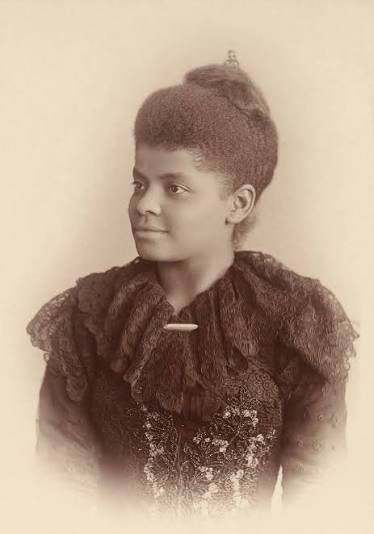
Ida B. Wells never made Virginia’s Northern Neck a center of her organizing, and no surviving evidence establishes a personal relationship between her and Westmoreland County banker W. T. Mayo. Yet Wells’s career illuminates the meaning – and the limits – of Mayo’s eventual support for woman suffrage. She can be understood as his Cautionary Tale: a living demonstration of what happened when a Black woman demanded that the promises of citizenship apply without regard to either race or sex.
While Mayo could accept votes for women as a means of preserving the existing racial order, Wells insisted that suffrage was valuable only when it challenged that order. Their historical connection is therefore not personal but ideological. The distance between them reveals how white supremacy shaped the suffrage debate in the Northern Neck and across the nation.
Mayo was a prominent banker (see Leaner’s Box), businessman, and civic advocate associated with Kinsale and Hague in Westmoreland County. (There is no photo of him, but the edifice for his bank still exists, as a Historically Preserved Building).
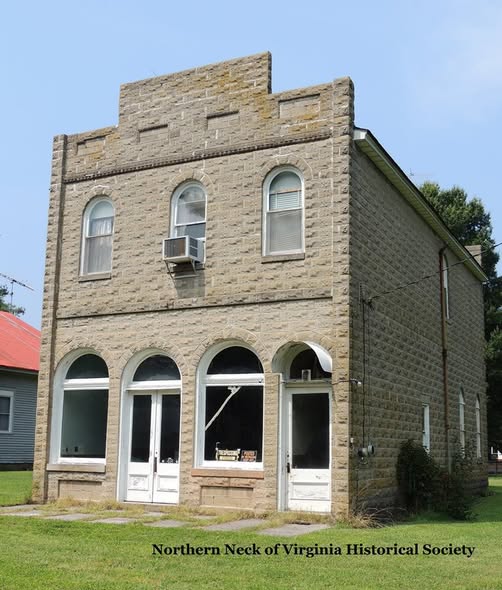
On January 24, 1920, while Virginia considered the proposed Nineteenth Amendment, he sent suffragist Adèle Clark a telegram declaring that Virginia should not “lag behind a movement endorsed by the best thought of the civilized world.” At first glance, his statement appears progressive. Mayo had joined those who believed women’s enfranchisement was inevitable and desirable.
The remainder of his argument, however, exposed the racial boundary of that support. Mayo reassured opponents that white women voters could “elevate the balance above the danger of Negro dominancy.” He did not present the ballot as a universal right. Instead, he portrayed white woman suffrage as protection against Black political influence. His concession to women’s equality therefore rested upon an assurance of continued racial inequality. As a pragmatic Banker, Mayo’s appeal was that of a “strategic surrender”,
| Learner’s Box – Art of War – Pragmatism of Sun Tzu |
| When it becomes obvious that a “change is gonna come“, it would be wiser for opponents to just concede that fact. This is a lesson-learn from military strategies (i.e. Sun Tzu): if combatants know that the end result of a fight would be imminent defeat, they should not fight; rather they should just concede and negotiate favorable terms of surrender. According to Sun Tzu in The Art of War, you should surrender—or rather, recognize that a fight is lost—when continuing to battle brings certain destruction, and you must compel your enemy to surrender when their position is rendered completely hopeless without needing to strike a blow. [1, 2, 3] Core Principles on Surrender and Engagement The Supreme Goal: o The highest skill in war is to subdue the enemy without fighting. If you maneuver your opponent into a position where resistance is futile, they should surrender. [1, 2] o Knowing When Not to Fight: Sun Tzu taught that you must not fight if victory is impossible or if the cost outweighs any possible gain. Persisting out of anger or stubbornness when the situation is already lost leads to total ruin. [1, 2, 3] o The Trapped Opponent: If you surround an enemy army, Sun Tzu famously advised to leave an outlet. Do not press a desperate foe too hard; giving them a way out prevents them from fighting to the absolute death with reckless fury. |
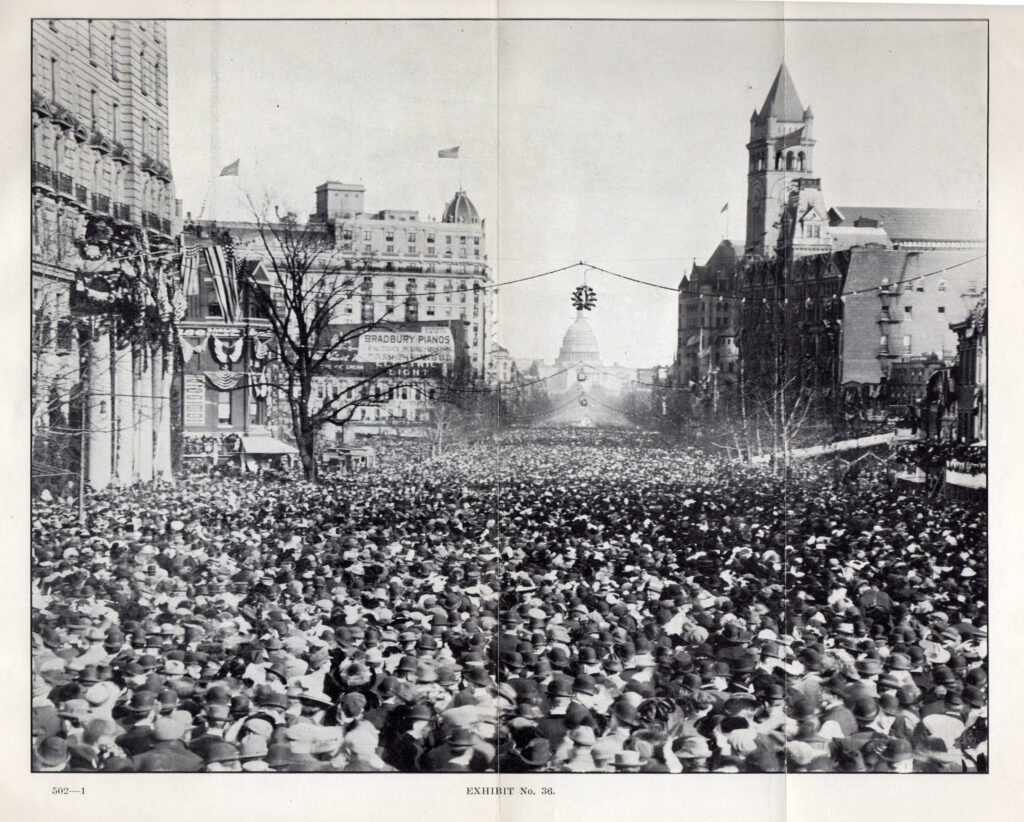
Wells’s life demonstrated why such an assurance mattered to men like Mayo. She stood at the intersection of struggles that Mayo’s formulation attempted to separate. She was a woman who demanded political equality, but she was also a Black journalist who exposed lynching, disfranchisement, and white supremacy. Granting political power to women such as Wells would not simply enlarge the electorate while leaving the social order intact. It could provide determined Black organizers with another instrument for challenging that order.
Wells had learned early that racial violence was political. After the 1892 lynching of her friends Thomas Moss, Calvin McDowell, and Henry Stewart in Memphis, she investigated the claims used to excuse mob murder. Her reporting showed that allegations of sexual danger—particularly claims that Black men threatened white women—often concealed economic competition, consensual relationships, or efforts to keep African Americans politically subordinate. Her newspaper office was destroyed, and threats made it unsafe for her to return to Memphis. She nevertheless continued her campaign through lectures, articles, and such influential publications as Southern Horrors and The Red Record.
This experience revealed the first and most dangerous source of opposition Wells faced: the white male power structure. White political and economic leaders maintained authority not only through elections and laws but also through intimidation, press control, segregation, and racial terror. Lynch mobs enforced boundaries that courts and legislatures either could not or would not defend openly. Wells threatened this arrangement because she gathered evidence, named the motives behind racial violence, and carried her findings to national and international audiences. Her work deprived lynching of its respectable excuses.
Mayo’s telegram belonged to the same political world, even though its language was more restrained. His reference to “Negro dominancy” drew upon a familiar white supremacist argument: any expansion of democracy had to be judged by whether it strengthened or weakened white control. Wells represented precisely the kind of independent Black political voice that such rhetoric sought to contain. Her career warned Mayo and similarly situated white men that woman suffrage could not be assumed to mean white woman suffrage alone.
Wells also encountered opposition among white suffragists. Many white women sincerely opposed their own political exclusion while remaining unwilling to challenge racial segregation. Some even argued that enfranchising educated white women would help preserve white political supremacy. Their movement could therefore describe voting as a natural right while treating Black women’s exercise of that same right as a strategic liability.
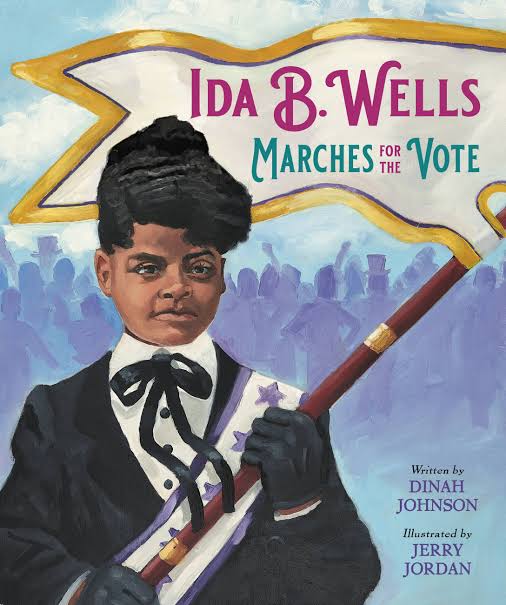
The 1913 suffrage procession in Washington, D.C., made this contradiction especially visible. Organizers, fearing the objections of white Southern participants, pressured Black women to march separately. Wells refused to accept the assigned racial boundary. She stepped into the procession and joined the Illinois delegation. Her action forced the movement to confront a question it preferred to postpone: did “votes for women” mean all women, or only those whom white political leaders considered safe?
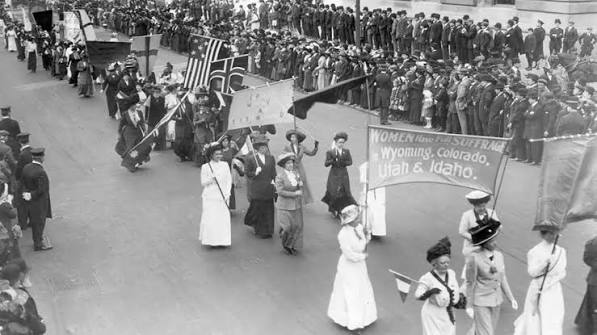
This question gives Wells particular importance to the history of the Northern Neck. Adèle Clark’s organizing helped persuade men such as Mayo to support suffrage. Wells’s experience reveals the possible cost of that persuasion. If advocates obtained white male approval by promising that women’s votes would strengthen white supremacy, Black women were transformed from fellow citizens into political dangers. Mayo’s telegram recorded not merely an advance for women but also an attempt to control which women would benefit from that advance.
Wells’s battles were not confined to white opponents. She also faced disagreement within the Black community. It would be misleading to describe the Black community as uniformly hostile to her; Wells had many Black allies, readers, and fellow organizers. Nevertheless, some influential Black leaders considered her methods too confrontational. The accommodationist philosophy associated with Booker T. Washington emphasized industrial education, economic advancement, institution-building, and cautious negotiation with powerful white benefactors. Wells believed that economic progress without enforceable civil and political rights left Black lives exposed to violence.
These disagreements concerned both strategy and survival. Black leaders operated under severe constraints, and caution could protect institutions, employment, and lives. Wells nevertheless feared that silence purchased temporary security at the expense of those most vulnerable to racial terror. Her criticism of prominent leaders and organizations sometimes left her isolated or excluded from positions of influence. Thus, she fought not “the Black community” as a whole, but tendencies within Black leadership that prioritized gradualism, diplomacy, or institutional security over direct confrontation.
The opposition she faced on three fronts was interconnected. White men demanded racial control. White suffragists sometimes sacrificed racial equality to obtain gender reform. More cautious Black leaders feared the consequences of challenging the system too directly. Wells rejected all three limitations. She would not separate voting rights from protection against lynching, women’s advancement from Black citizenship, or racial progress from women’s leadership.
The Nineteenth Amendment was ratified nationally on August 18, 1920, although Virginia rejected ratification at the time and did not formally ratify it until 1952. Even after the amendment became law, Black women across Virginia and the South continued to face poll taxes, literacy tests, intimidation, economic retaliation, and violence. The amendment prohibited disfranchisement on account of sex; it did not dismantle the machinery used to disfranchise African Americans.
For that reason, the achievement of 1920 should not be described without qualification as universal suffrage. Wells understood that possessing a constitutional right and being permitted to exercise it were different things. Her founding of Chicago’s Alpha Suffrage Club and her broader political work connected the ballot to community organization, public safety, and accountable government. Voting was not merely recognition of individual equality. It was a means by which Black communities might defend themselves.
Mayo’s telegram nevertheless gives the Northern Neck a revealing place in the national story. It captures the moment when a prominent local man accepted woman suffrage while attempting to place it within the boundaries of white supremacy. Wells, though physically distant, exposes the contradiction in that position. She is his Cautionary Tale because her life showed that Black women would not necessarily use political power to “elevate the balance” in favor of the existing order. They might instead use it to investigate violence, challenge segregation, organize independent constituencies, and hold powerful men accountable.
The deeper connection between Ida B. Wells and Virginia’s Northern Neck is therefore one of contrast. Mayo envisioned a broader electorate that remained racially controlled. Wells envisioned citizenship that could not be divided into safe and dangerous claimants. His support for suffrage reveals how reform could be admitted without surrendering hierarchy; her career reveals why genuine democracy required that hierarchy itself to be confronted. In the space between Mayo’s concession and Wells’s demands lies the unfinished history of American suffrage—a struggle not only over whether women could vote, but over whose freedom the nation was prepared to recognize.
| Learner’s Box – About the Bank of Kinsale |
| The Bank of Kinsale was a notable early 20th-century financial structure located on Bank Street in the Kinsale Historic District of Westmoreland County, Virginia. [1, 2, 3] History of the Bank of Kinsale Establishment (1909): o The bank building was constructed in 1909 using textured cement blocks. True to the era, the building functioned as a commercial bank on the main level and served as a private residence on the second floor. [1, 2, 3] o Local Boom: During the early 20th century, Kinsale thrived as a busy Potomac River steamboat landing, canning town, and port. A University of Virginia economic study from the era highlighted Kinsale as one of the largest settlements in the county, specifically citing its economic reliance on its “strong bank”. [1, 2] o Surviving the Depression: The Bank of Kinsale successfully managed to navigate the financial hardships of the Great Depression.[1] o Acquisition (1938): In 1938, the independent operation came to an end when the location was absorbed to become the second branch of the Bank of Westmoreland. |
| Corporate Lineage of The Bank of Westmoreland | ||
| Era / Year | Corporate Entity Name | Lineage Event |
| 1904 | The Bank of Westmoreland | Founded in Colonial Beach, Virginia. It grew to become the largest bank in Virginia’s Northern Neck region. |
| 1938 | The Bank of Westmoreland | Expanded its local footprint by absorbing the independent Bank of Kinsale as its second regional branch. |
| 1972 | First Virginia Bankshares Corporation | The Bank of Westmoreland officially ended its independent run and was acquired by First Virginia Bankshares, one of the state’s largest historic holding companies based in Falls Church. |
| 2003 | BB&T (Branch Banking and Trust Company) | First Virginia Banks, Inc. was acquired by North Carolina-based regional powerhouse BB&T in a massive $2.4 billion stock transaction. |
| 2019 | Truist Financial Corporation | BB&T merged with SunTrust Banks in a “merger of equals” to create Truist, which operates as the ultimate successor to the old Bank of Westmoreland footprint. |
There is an advanced Social Science of Intersectionality.
| Learner’s Box – What is Intersectionality? |
| Put simply, intersectionality is the concept that all oppression is linked. More explicitly, the Oxford Dictionary defines intersectionality as “the interconnected nature of social categorisations such as race, class, and gender, regarded as creating overlapping and interdependent systems of discrimination or disadvantage”. Intersectionality is the acknowledgement that everyone has their own unique experiences of discrimination and oppression and we must consider everything and anything that can marginalise people – gender, race, class, sexual orientation, physical ability, etc. First coined by Professor Kimberlé Crenshaw back in 1989, intersectionality was added to the Oxford Dictionary in 2015 with its importance increasingly being recognised in the world of women’s rights. So, what’s it got to do with women’s rights? Without an intersectional lens, our efforts to tackle inequalities and injustice towards women are likely to just end up perpetuating systems of inequalities. Feminist writer Zoe Samudzi reminds us that “intersectionality is such a vital framework for understanding systems of power, because ‘woman’ is not a catchall category that alone defines all our relationships to power”. A black woman may experience misogyny and racism, but she will experience misogyny differently from a white woman and racism differently from a black man. The work towards women’s rights must be intersectional – any feminism that purely represents the experiences of white, middle class, able-bodied, heterosexual etc. women will fail to achieve equality for all. |
The drama of Adèle Clark vs Ida B, Wells is a classic example of Intersectionality. Except that was 106 years ago. There has been a lot of societal progress since then, right?
There is a yearning to Make America Great Again.
We confess, there was a time when America was great for certain persons …
… if that person was:
- White
- Male
- Anglo
- Protestant
- Straight
- Able-bodied
- Rich
Everybody else – longed for and fought for change, for something better.
😊
See TED Talk Video by Kimberlé Crenshaw: https://youtu.be/akOe5-UsQ2o?si=qnEnW03z0uhdeZ28