rosawyer
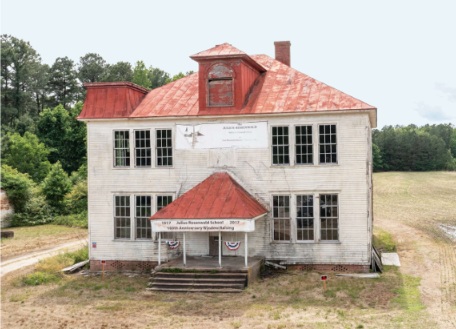
In 1917, in the farm country near Reedville, Virginia, a two-story, six-room, wood-frame schoolhouse opened its doors as the Northumberland County Training School. Local African American families had raised more than $7,000 of their own money to build it, and the Rosenwald Fund supplied the rest. In 1932 the building was renamed Julius Rosenwald High School, and until it closed in 1958 it drew students from across Northumberland County, some traveling thirty miles or more to reach a classroom. That single building, still standing and remarkably well preserved, is a small monument to one of the most consequential educational partnerships in American history: the alliance between Julius Rosenwald, a Jewish businessman from Chicago, and Booker T. Washington, the formerly enslaved founder of Tuskegee Institute.
A Promise Only Half Kept
Virginia’s constitution of 1869 established a universal but segregated system of public education. Before that, schooling was largely private or church-sponsored and out of reach for most children, and almost entirely out of reach for Black children. The promise of universal education was real; the funding behind it was not. Southern legislatures distributed school money in ways that left Black communities with a fraction of what white schools received, often with no adequate building at all. Yet during Reconstruction, formerly enslaved people pursued education with extraordinary determination, founding hundreds of schools across the South. They understood literacy as a form of liberation, and they were unwilling to wait for the state to agree.
The Partnership
Booker T. Washington had built Tuskegee Institute in Alabama into a national model of practical, industrial education: carpentry, masonry, agriculture, teacher training. Julius Rosenwald, president and later chairman of Sears, Roebuck & Co., had built one of the largest retail enterprises in the world and was searching for a way to put his fortune to serious moral use. When the two men met, Washington offered him something more valuable than a cause. He offered a method.
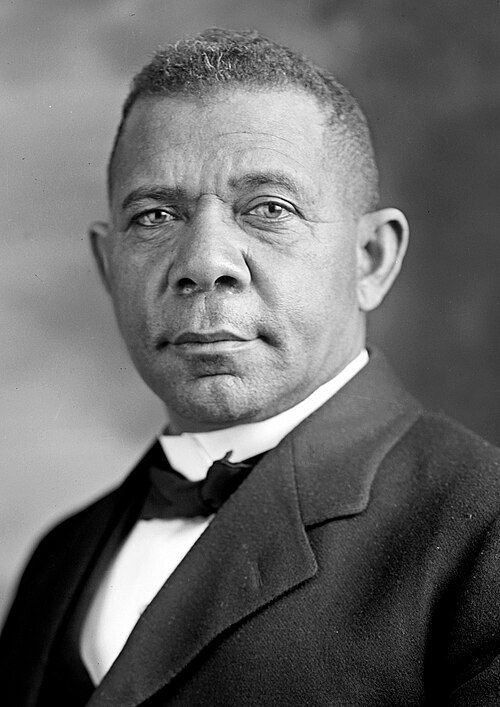
| Learner’s Box – Booker T Washington and Tuskegee |
| Booker T. Washington (April 5, 1856 – November 14, 1915) was an American educator, author, and orator. Between 1890 and 1915, Washington was the primary leader in the African-American community and of the contemporary Black elite. Washington was a Virginian. 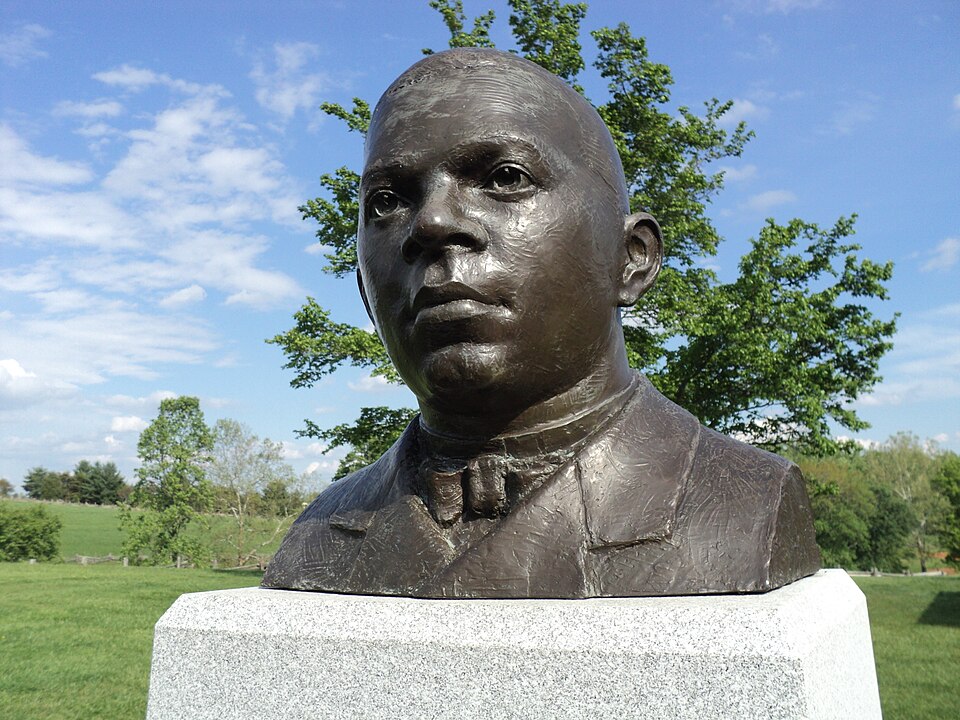 Though, not from the Northern Neck, he was endeared and endearing of the region. Born into slavery on April 5, 1856, in Hale’s Ford, Virginia, Washington was freed when U.S. troops reached the area during the Civil War. As a young man, he worked his way through Hampton Normal and Agricultural Institute and attended college at Wayland Seminary. (In 1897, this institution merged with its sister institution, the Richmond Theological Seminary, to form the current Virginia Union University in Richmond). In 1881, Washington was named as the first leader of the new Tuskegee Institute in Alabama, an institute for black higher education. He expanded the college, enlisting students in construction of buildings. Work at the college was considered fundamental to students’ larger education. He attained national prominence for his Atlanta Address of 1895, which attracted the attention of politicians and the public. Washington played a dominant role in black politics, winning wide support in the black community of the South and among more liberal whites. Washington wrote an autobiography, Up from Slavery, in 1901, which became a major text. In that year, he dined with Theodore Roosevelt , the 26th President of the US at the White House, which was the first time a black person publicly met the president on equal terms. After an illness, he died in Tuskegee, Alabama on November 14, 1915. The subsequent funeral processions were likened to the pomp-and-circumstance of a State Funeral. The Tuskegee Institute – a private, historically black land-grant school – became a part of the expansion of higher education for Black people in the former Confederate states following the Civil War, with many schools founded by the northern American Missionary Association. At the start, the principal for Virginia-based Hampton was queried for a recommendation for an originating Administrator. This is how Washington, the Hampton alumnus and teacher at Hampton was recruited to Tuskegee in 1881. Though Washington was highly respected within the Black Community, there were opposing voices that disagreed with his strategies, tactics and executions for Black progress. He promoted education and entrepreneurship, while others preferred to directly challenge the Jim Crow segregation and the disenfranchisement of Black voters in the South. Furthermore, he supported racial uplift, but secretly also supported court challenges to segregation and to restrictions on voter registration. Black activists in the North, led by W. E. B. Du Bois, disagreed with him and opted to set up the NAACP to work for political change. |
The Rosenwald Fund, formally established in 1917, was designed to use private money as leverage rather than as charity. Rosenwald money never paid the full cost of a school. Communities had to raise their own funds, contribute labor and materials, and secure a commitment of public dollars from the very school boards that had neglected them. The design was deliberate: it forced local white officials to put public money into Black education, and it left the finished school in the hands of the people who had built it. In Reedville, that meant more than $7,000 raised by Black families in a rural county with little cash to spare.
| Learner’s Box – Benefactor Julius Rosenwald and Sears Roebuck |
Julius Rosenwald (August 12, 1862 – January 6, 1932) was a Jewish American business executive and philanthropist. His Rosenwald Fund donated millions in matching funds to promote Black American education. Together with Booker T Washington, they built close to 5,000 schools, many of them in the segregated south and provided fellowships to close to one thousand grantees.[1][2] 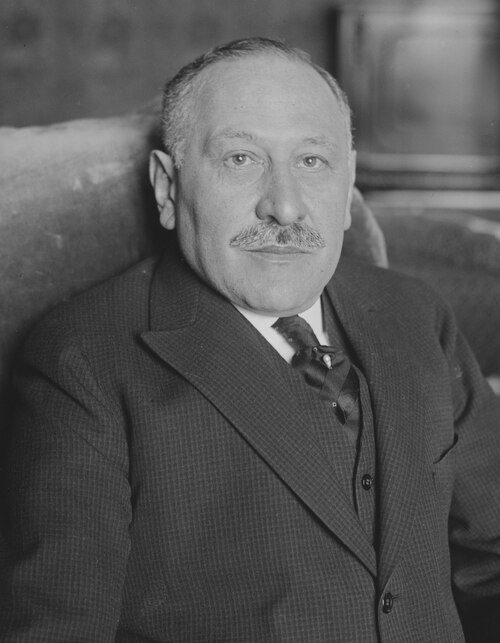 In 1919 Rosenwald was appointed to the Chicago Commission on Race Relations.[3] He was the long-time president and an owner of Sears, Roebuck and Company, the large and successful Chicago-based national retailer in the early 20th century. Yes, that Sears … Sears, Roebuck & Company became an iconic American retail business that, after as a mail-order watch company in 1886, grew into the largest department store chain in the United States in the 1980’s before facing major closures in the 21st century, followed by eventual dissolution. (In 1973 this company open the ten record 110-story Sears Tower in Chicago). In 1893, Richard Sears and Alvah C. Roebuck renamed their watch company Sears, Roebuck & Company and began to diversify. Rosenwald and Weil was a principal supplier of men’s clothing for Sears, Roebuck. The volumes of unsold merchandise caused by the Panic of 1893 and his declining health led Roebuck to leave the company. Roebuck placed his interest in the company in the hands of Sears who, in turn, offered that half of the company be sold to Chicago businessman Aaron Nusbaum, who in turn brought in Rosenwald, to whom Sears owed money. In August 1895, Sears sold Roebuck’s half of the company to Nusbaum and Rosenwald for $75,000. The new Sears, Roebuck and Company was re-incorporated in Illinois with a capital stock of $150,000 in August 1895. Sears and Rosenwald got along well, but Nusbaum, who was Gussie Rosenwald’s brother, was a problem. Sears and Rosenwald bought him out for $1.3 million in 1903.[13] Rosenwald brought to the company a rational management philosophy and diversified product lines: dry goods, consumer durables, drugs, hardware, furniture, and nearly anything else a farm household could desire. The company’s initiative at this time was particularly fortuitous with the initiation of Rural Free Delivery by the Post Office in 1896. From 1895 to 1907, under Rosenwald’s leadership as vice president and treasurer, annual sales of the company climbed from $750,000 to upwards of $50 million. The prosperity of the company and their vision for greater expansion led Sears and Rosenwald to take the company public in 1906. The Virginia Northern Neck, even at its peak, was at best a rural marketplace. The actuality of Sears, Roebuck and Company was meaningful to life in the Northen Neck. Beyond his business endeavors, Rosenwald devoted his time, energy, and money to philanthropy.[31] In his words, written in 1911: “The horrors that are due to race prejudice come home to the Jew more forcefully than to others of the white race, on account of the centuries of persecution which they have suffered and still suffer”. Rosenwald collaborated with Booker T. Washington of the Tuskegee Institute to address the poor state of African-American education, which suffered from inadequate buildings and books. In the beginning Rosenwald provided funds to build six small schools in rural Alabama, which were constructed and opened in 1913 and 1914, and overseen by Tuskegee. |
The Scale of the Work
Between 1913 and 1937, the Rosenwald building program helped construct roughly 5,000 to 5,358 schools, teachers’ homes, and industrial buildings across fifteen southern states. Virginia alone accounted for hundreds of them, with 308 recorded on the historic marker at Reedville and later counts running considerably higher when teachers’ homes and vocational buildings are included. Tuskegee supplied the architectural plans, and they were not incidental. The designs specified generous banks of windows for natural light, cross-ventilation, proper orientation to the sun, and movable partitions, because most of these buildings would have no electricity. A Rosenwald school was engineered to be a decent place to learn on a tight budget, and the discipline of that design is a large part of why so many survive today.
Julius Rosenwald High School was one of only two two-story Rosenwald training schools in Virginia, and only one training school was built per county in the state. It served the first generation of African Americans born after Reconstruction, offering them a secondary education that the county otherwise would not have provided.
The Argument Inside the Achievement
Any honest account has to sit with the tension in this story. Washington was an accommodationist. He counseled Black southerners to build economic strength, master trades, and demonstrate their worth before pressing for full political and social equality. W. E. B. Du Bois and others rejected that bargain outright, arguing that civil rights and equality were owed immediately and unconditionally, and that a curriculum centered on industrial training risked ratifying the ceiling white society had already imposed. The architectural record makes the criticism concrete: as the Virginia Department of Historic Resources observes of the Reedville school, its form reflects the kind of training white authorities deemed acceptable for Black students.
Both things are true. The Rosenwald program operated within Jim Crow rather than against it, and it accepted segregation as the price of getting buildings up. It also produced hundreds of thousands of literate graduates, trained a generation of Black teachers, and put durable community institutions in places that had none. Historians have since traced measurable gains in literacy, school attendance, earnings, and northern migration among children who attended these schools. The students who walked out of Rosenwald classrooms did not stay inside the limits their curriculum implied. Many of them, and their children, staffed the civil rights movement that dismantled the very system the schools had been forced to accommodate.
Heroes in Black and White
What makes this history worth telling now is the shape of the coalition behind it. A Jewish retailer from Chicago, a formerly enslaved educator from Alabama, and thousands of rural Black families who gave money they did not have and labor after a full day’s work. None of them could have done it alone. Rosenwald had capital but no standing in the South and no plan; Washington had the plan and the credibility but not the capital; the communities had the will and the need but neither. The matching-fund structure fused all three into something none could produce separately.
Rosenwald himself refused to let the fund outlive its usefulness, ordering that it spend down its entire endowment within twenty-five years of his death rather than harden into a perpetual institution. It closed in 1948, its work finished.
What Reedville Still Says
The building near Reedville is still there: six rooms, two stories, wood frame, unusually intact. It is easy to walk past a structure like that and see only an old schoolhouse. What it actually records is a community that decided its children would be educated whether or not the state agreed, and two men from opposite ends of American life who found a way to make that decision affordable. The heroes of racial reconciliation, as the Northern Neck Hidden History Trail rightly notes, come in Black and white. At Julius Rosenwald High School they came together, and the evidence is still standing.