rosawyer
 For much of Virginia’s history, the freedom to love and marry was constrained by laws designed to preserve White Supremacy. Under Jim Crow, segregation governed far more than schools, transportation, and public accommodations. It reached into the home, attempting to dictate whom a person could marry and build a family with. Yet in and around the Northern Neck and the Rappahannock River region, lived experience often challenged the rigid racial categories imposed by the State. Communities shaped by Native American, African, and European ancestry demonstrated that human relationships were more complex—and more humane—than segregationist law allowed.
Mildred Delores Jeter Loving emerged from this complicated social world. She identified herself as Indian-Rappahannock, although historical records also described her in other ways, including as Black or “colored.” Those shifting labels reveal less about Mildred than they do about Virginia’s determination to force multiracial people into artificial categories. Her heritage reflected generations of contact among Indigenous, African American, and European communities. The Rappahannock people, whose ancestors had lived along the river long before English settlement, endured colonization, displacement, and efforts to erase Native identity. In communities where family histories crossed official racial boundaries, kinship and mutual loyalty could matter more than the classifications written into law.
| Learning Box – Northern Neck Geography |
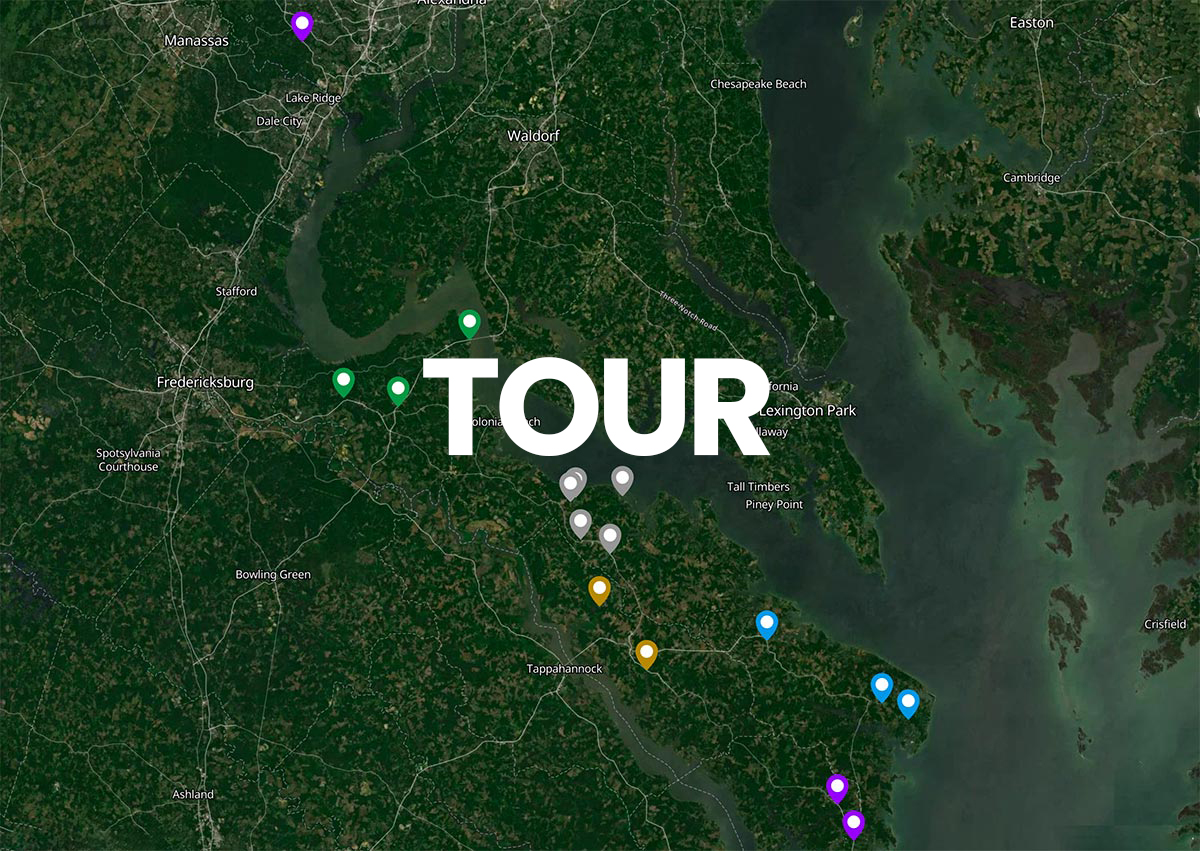
| The Northern Neck is the northernmost of three peninsulas (traditionally called “necks” in Virginia) on the western shore of the Chesapeake Bay in the Commonwealth of Virginia (along with the Middle Peninsula and the Virginia Peninsula). The Potomac River forms the northern boundary of the peninsula; the Rappahannock River demarcates it on the south. The land between these rivers was formed into Northumberland County in 1648, prior to the creation of Westmoreland County and Lancaster County.[1] The Northern Neck encompasses the following Virginia counties: Lancaster, Northumberland, Richmond, and Westmoreland;[2] it had a total population of 50,158 as of the 2020 census.[3] Commentators vary as to whether to include King George County in the Northern Neck.[4] Historically, King Charles II’s grant for the Northern Neck included all land between the Rappahannock and Potomac rivers, including far upstream of King George County comprising some five million acres. The boundaries of King George and Westmoreland counties have changed radically since their establishment, with significant exchanges of territory. Significant portions of the early King George County lie in present-day Westmoreland County.[5] **** For the purpose of the Northern Neck Hidden History Trail, we include King George County. We also consider the waterbodies: Potomac River, Rappahannock River and the Chesepeake Bay. This means that stories in aligning counties may also “bleed” over into the NNKHHT; such as Caroline County … *** The word “Caroline” is a Latin derivative from the name Charles. Caroline County is located in the eastern part of the Commonwealth of Virginia. The northern boundary of the county borders on the Rappahannock River, notably at the historic town of Port Royal. The Rappahannock River is a river in eastern Virginia, in the United States,[2] approximately 195 miles (314 km) in length.[3] It traverses the entire northern part of the state, from the Blue Ridge Mountains in the west where it rises, across the Piedmont to the Fall Line, and onward through the coastal plain to flow into the Chesapeake Bay, south of the Potomac River. An important river in American history, the Rappahannock was long an area of occupation by indigenous peoples, including the Rappahannock Tribe. Similarly, during the colonial era, early settlements in the Virginia Colony were formed along the river. (In 1607 when the English arrived, the Rappahannock were the dominant tribe of the Rappahannock River valley – today’s Northern Neck – maintaining 13 villages along the north and south banks of the river named after them). During the American Civil War, due to the river’s acting as a barrier to north–south troop movements, it effectively functioned as the boundary of the eastern theater of the war, between the “North” (the Union) and the “South” (the Confederate States of America). It was at the center of a major theater of battle where tens of thousands of troops fought against each other. In this period some 10,000 enslaved African Americans escaped to freedom across the river to Union lines, after the first Battle of Fredericksburg. The Rappahannock Tribe remains. Today, they are a federally recognized Native American tribe in Virginia and one of the eleven state-recognized tribes. |
This tradition of practical toleration formed an important backdrop to Mildred’s relationship with Richard Loving, a white man. Richard and Mildred grew up in Central Point, a rural community in Caroline County with longstanding ties to the wider Rappahannock region. Central Point had been visibly mixed-race since the nineteenth century. Its residents lived under Jim Crow, but they did not always accept its assumptions. Families formed relationships across racial lines, protected one another, and developed quiet ways of resisting officials who tried to police their identities. The community’s conduct exposed a basic truth: segregation was not a natural expression of local life. It was an oppressive system imposed upon people whose lives had long been intertwined.
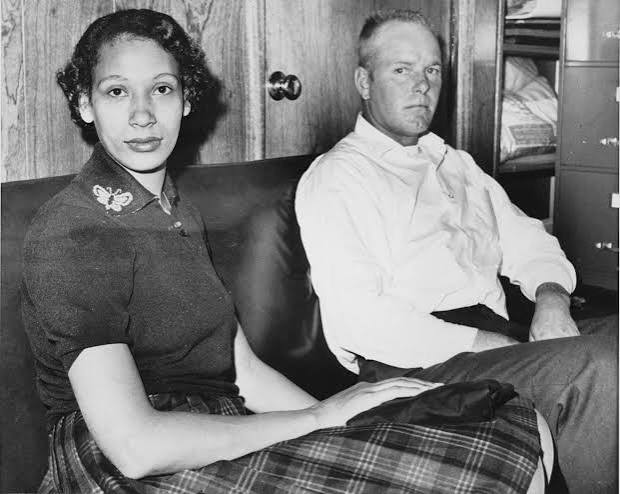
When Richard and Mildred fell in love, they were therefore not inventing a new kind of relationship. They were following a pattern of human connection familiar within their community. After Mildred became pregnant, the couple traveled to Washington, D.C., and married in June 1958. Virginia, however, refused to recognize their marriage under its Racial Integrity Act of 1924. Several weeks after the Lovings returned home, police entered their bedroom in the middle of the night. Mildred pointed to the marriage certificate hanging on the wall, but the officers told her that it had no validity in Virginia. The State treated their commitment not as a marriage worthy of protection, but as a crime.
In 1959, Richard and Mildred were convicted of violating Virginia’s ban on interracial marriage. Judge Leon Bazile suspended their prison sentences only on the condition that they leave Virginia and remain away together for twenty-five years. The punishment was cruel in its simplicity: the Lovings could preserve their marriage only by surrendering their home. They did not seek fame or set out to become national symbols. They wanted to live near their families, raise their children, and enjoy the same privacy and dignity that other married couples took for granted.
Their personal struggle eventually reached the United States Supreme Court. Virginia defended its law by arguing that it punished white and nonwhite spouses equally. The justices unanimously rejected that reasoning. On June 12, 1967, the Court ruled in Loving v. Virginia that racial restrictions on marriage violated both the Equal Protection and Due Process Clauses of the Fourteenth Amendment. Marriage, the Court affirmed, was a fundamental freedom. The government could not deny that freedom merely to maintain racial hierarchy.
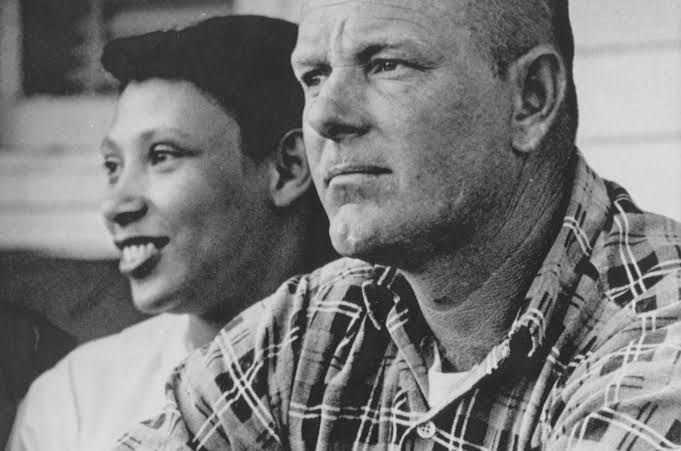
The decision overturned the Lovings’ convictions and invalidated laws against interracial marriage throughout the United States. Its significance, however, extended beyond legal doctrine. The ruling recognized that racial classifications devised by the State could not define the worth of a relationship. It also vindicated communities that had quietly placed love, family, and belonging above Jim Crow orthodoxy. Their resistance was not always expressed through speeches or organized protests. Sometimes it appeared in the decision to welcome a relative, protect a neighbor, recognize a marriage, or refuse to let the State’s prejudices determine whom one could love.
The Rappahannock and multiracial communities connected to Mildred Loving’s world remind us that American history is not only a record of unjust laws. It is also a record of people who lived beyond those laws’ narrow vision. Their tolerance did not erase the dangers of segregation, but it preserved a more generous understanding of community until the nation’s legal institutions began to catch up.
Loving v. Virginia changed the country because two ordinary people insisted that their marriage belonged to them, not to the State. Their victory dismantled one of Jim Crow’s most intimate forms of control and helped American society move closer to its promise of equal liberty. We are a better country because Richard and Mildred Loving chose one another—and because the people around them had long understood what Virginia law refused to admit: love is not made illegitimate by crossing a color line.
See the beautiful Love Story in this Learning Box – Chubby Checker story here:
| Learning Box: Chubby Checker and the Beauty Queen |
| “The Good Old Days weren’t all so good!” Remember Chubby Checker (Rock-n-Roll Hall of Famer) …  It wasn’t their age, their background or the color of their skin that mattered — it was the love they had for each other. And after 62 years of marriage, Chubby Checker and former beauty queen Catharina Lodders have proved just how strong that bond can be. When they fell in love, America was still deeply divided by race. The couple married in 1964, at a time when interracial marriage was still illegal in several states. Those bans wouldn’t be struck down nationwide until three years later. But Chubby wasn’t going to let the laws or other people’s opinions decide who he could love. When people questioned his decision to marry a white woman, he simply said: “I didn’t care. Love ain’t got no color on it.” The couple married when they were just 22 years old, and from the very beginning, they were determined to build a life together on their own terms. But their love was tested by some major challenges. When they tried to buy a home in Philadelphia, they faced discrimination because of their interracial marriage. Over the years, they welcomed three children — Bianca Johanna Evans, WNBA player Mistie Bass and musician Shan Egan — and eventually became grandparents to seven grandchildren. Decades later, Chubby and Catharina are still together and they just celebrated 62 years of marriage. But their story is about much more than a famous singer and a former beauty queen. 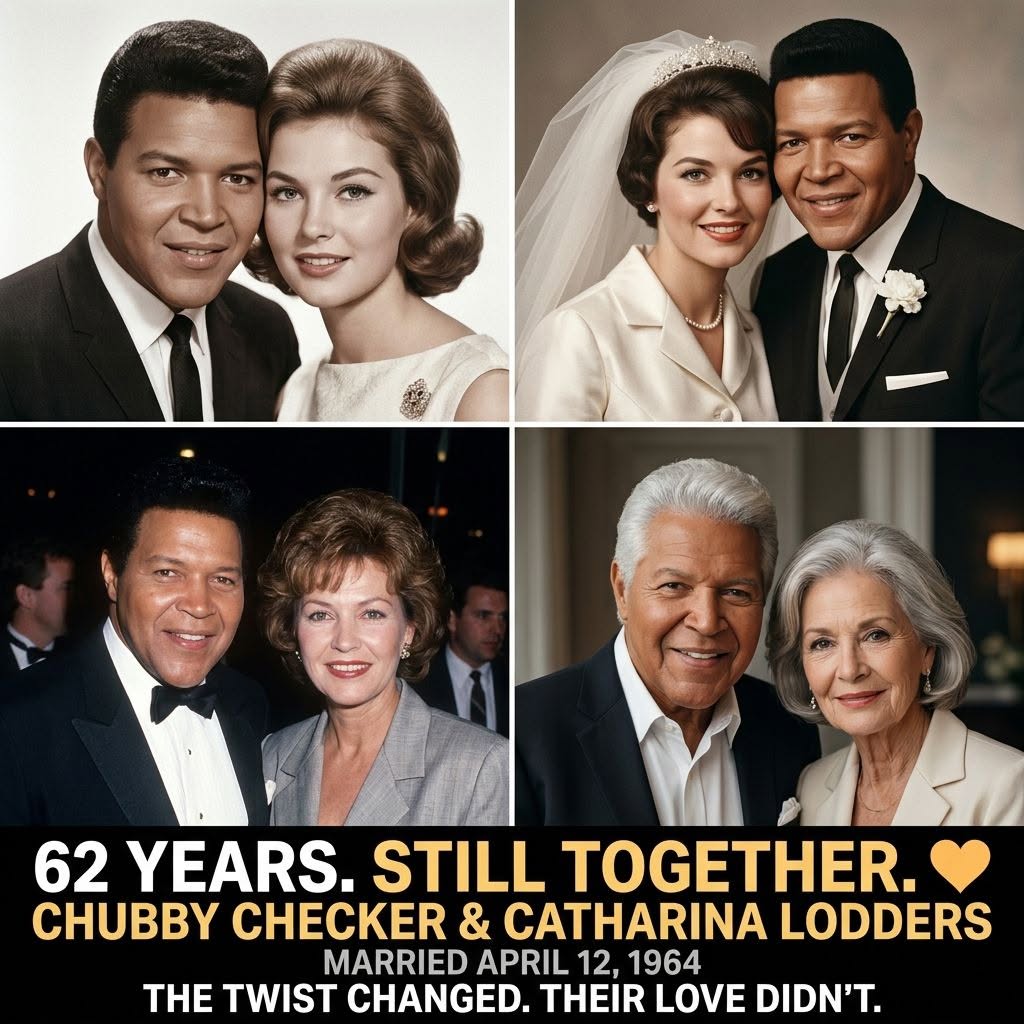 It’s about two people who found each other, faced discrimination together and refused to let the world tell them who they could love. It’s not your age or the color of your skin that matters. It’s the love you have for each other — and Chubby and Catharina have certainly proved that their bond is incredibly strong. Video – Chubby Checker – Let’s Twist Again – https://youtu.be/xncyDs1C8qY?si=gP633eGTGf_bHTip <iframe width=”560″ height=”315″ src=”https://www.youtube.com/embed/xncyDs1C8qY?si=gP633eGTGf_bHTip” title=”YouTube video player” frameborder=”0″ allow=”accelerometer; autoplay; clipboard-write; encrypted-media; gyroscope; picture-in-picture; web-share” referrerpolicy=”strict-origin-when-cross-origin” allowfullscreen></iframe> |
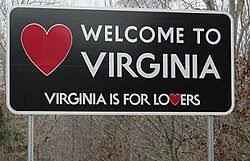
Virginia is for Lovers …
… is a Tourism Marketing tagline … now; it was introduced in 1969 (2 years the aforementioned Supreme Court ruling).
We wholeheartedly agree! Here, at the Northern Neck Hidden History Trail, we celebrate love; we celebrate these Victors.
Yes, Virginia is for Lovers – Past, Present and Future.
This endearing story of Richard & Mildred Loving versus the State of Virginia is still teaching America how to love; see the 2016 Movie Trailer here – this is Art imitating Life:
Movie Trailer – LOVING – Official Trailer – https://youtu.be/bQMF5MSohPA?si=jf0u7Ly0dfN96tHj
<iframe width=”560″ height=”315″ src=”https://www.youtube.com/embed/bQMF5MSohPA?si=jf0u7Ly0dfN96tHj” title=”YouTube video player” frameborder=”0″ allow=”accelerometer; autoplay; clipboard-write; encrypted-media; gyroscope; picture-in-picture; web-share” referrerpolicy=”strict-origin-when-cross-origin” allowfullscreen></iframe>
November 2016 – From acclaimed writer/director Jeff Nichols, “Loving” celebrates the real-life courage and commitment of an interracial couple, Richard and Mildred Loving (Joel Edgerton and Ruth Negga), who married and then spent the next nine years fighting for the right to live as a family in their hometown. Their civil rights case, Loving v. Virginia, went all the way to the Supreme Court, which in 1967 reaffirmed the very foundation of the right to marry – and their Love Story has become an inspiration to couples ever since.