 rosawyer
Sub-title: A Deep-Dive into the Sites, Legacies and Culture of the Chitlin’ Circuit in Virginia’s Northern Neck
Some people call it the Good Old Days. Some people call it the Bad Old Days. In the Northern Neck, we just call it the Olden Days.
Every region keeps two histories. One is carved in granite and printed on highway markers: the birthplaces of presidents, the plantations, the courthouses. The other lives in kitchens and church fellowship halls, in the memory of someone who remembers what it felt like to walk barefoot across warm sand toward a bandstand while a horn section tuned up across the water. The Northern Neck of Virginia, the narrow peninsula pressed between the Potomac and the Rappahannock, holds both. This essay is about the second history: the story of how Black families on the Neck, shut out of the region’s white-only resorts and dance halls, built places of their own, and how those places became part of a national network of music, pleasure and survival known as the Chitlin’ Circuit.
History happened here. It is the history of how we lived, how we worked, and how we played.
I. What the Chitlin’ Circuit Was
The Chitlin’ Circuit was never a single company or an official route. It was a loose, living web of theaters, juke joints, ballrooms, roadhouses, tobacco warehouses, fairgrounds and beach pavilions across the East, the South and the upper Midwest, where African American musicians, comedians and dancers could earn a living during segregation, roughly from the 1930s through the 1960s. The name nods to chitterlings, a soul-food dish born of necessity and turned into a delicacy, and it plays on the “Borscht Belt,” the Catskill resorts that served Jewish audiences in the same decades.
For performers, the circuit was a grind: long drives in crowded cars, nights of one-night stands, and the constant question of where a Black traveler could safely eat, sleep or buy gasoline. For audiences, it was something close to sacred. It meant that on a Saturday night in a small rural county, you might see the same artist who had just played the Apollo in Harlem or the Howard in Washington. James Brown, Etta James, Gladys Knight, The Temptations and countless lesser-known bands sharpened their craft on these small stages, in front of crowds who knew the music and expected the best.
The circuit was also an economy. Each venue needed a promoter, a cook, a bartender, a parking attendant, a family willing to rent a spare room. Money that would otherwise have gone to white-owned businesses circulated inside Black communities. In that sense, every stop on the circuit was a small act of self-determination.
| Learning Box: Chitlin’ Circuit |
| The Chitlin’ Circuit was a collection of performance venues found throughout the eastern, southern, and upper Midwest areas of the United States. They provided commercial and cultural acceptance for African-American musicians, comedians, and other entertainers following the era of venues run by the “white-owned-and-operated Theatre Owners Booking Association (TOBA)…formed in 1921.”[1] The Chitlin Circuit sustained black musicians and dancers during the era of racial segregation in the United States from the 1930s through the 1960s.[2][1][3] The etymology of the word Chitlin’ is very significant; it is derived from the soul food dish chitterlings (boiled pig intestines).[1][3] It is also a play on the term “Borscht Belt“, which referred to particular resort venues (primarily in New York State’s Catskill Mountains) very popular with Jewish performers and audiences during the 1940s through the 1960s.[4] Chitterlings are part of the culinary history of African Americans, who were often limited to the intestines of the pig to eat as opposed to the bacon or ham. Henry Louis Gates Jr. suggests the food symbolized acquiring a taste out of necessity and eventually coming to like it.[5] [Borscht is a from a popular soup among Eastern European Jews; so Chitlin’ for African-Americans and Borscht for Jewish-Americans establishes a parallel branding for two historically discriminated groups in American history]. According to the Oxford English Dictionary, the earliest known use of the term “Chitlin’ Circuit” was in a 1966 article in the Oakland Tribune, quoting [R&B Singer] Lou Rawls.[6] [Now], in the 21st century, the term is [still] applied to the venues, especially in the South, where contemporary African-American Blues artists like singers Bobby Rush, Denise LaSalle, and O.B. Buchana continue to appear regularly. There is a contemporary use of the term Chitlin’ Circuit, Ebony magazine prefers the term “urban theater circuit” for recent work like that of playwright and actor Tyler Perry. In a January 2004 interview with Perry, the genre’s leading practitioner, Ebony wrote his work marked “a new chapter in the urban theater circuit as a whole – a genre that has been dogged by criticism from some Blacks in the traditional theater. Perry, as the most visibly recognized player in the circuit, has felt the brunt of this criticism.” “They say that Tyler Perry has set the Black race back some 500 years with these types of “Chitlin’ Circuit” shows. The problem with the naysayers is that they don’t take the opportunity to see my shows,’ Perry argued. “With my shows, I try to build a bridge that marries what’s deemed ‘legitimate theater’ and so-called ‘chitlin’ circuit theater,’ and I think I’ve done pretty well with that, in bringing people in to enjoy a more elevated level of theater.'”[7] In 2025, Beyoncé named her concert tour the Cowboy Carter and the Rodeo Chitlin’ Circuit Tour, which supported her 2024 album Cowboy Carter.[3] [Obviously Beyoncé, as one of the biggest Artists in the world was not performing at a Chitlin’ Circuit venue, but rather she was honoring that enduring legacy; think Return-on-Investment with an exponential interest rate]. 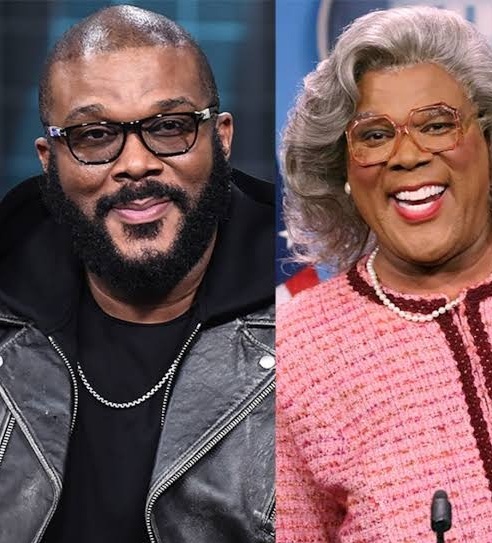 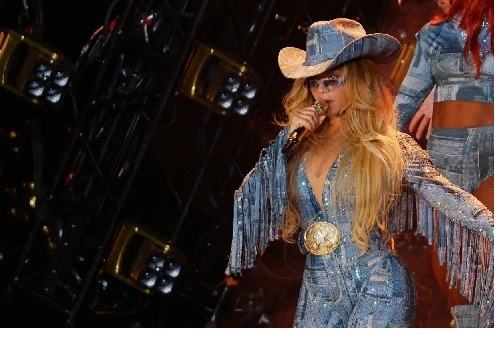 Photos: Tyler Perry as Madea & Beyoncé circa Cowboy Carter. See here, a list of Notable Venues that constituted the Chitlin’ Circuit; also a list or erstwhile artists who preformed at the venues: Source: Wikipedia retrieved October 17, 2026 from https://en.wikipedia.org/wiki/Chitlin%27_Circuit |
II. Why the Water Mattered
Along the Chesapeake Bay and its rivers, the circuit took on a distinctive form: the Black-owned beach resort. Public beaches across the Mid-Atlantic were segregated by law or by custom, and the shoreline itself was among the most fiercely guarded spaces of Jim Crow. To own waterfront and open it to Black families was therefore a bold economic and social statement.
These resorts did more than offer a swim. They combined a beach, a dining room, a dance pavilion and often a small hotel or cabins. Families came by day for picnics and baptisms of sunlight; by night the pavilions filled with dancers. Up the Bay at Annapolis, Maryland, Carr’s Beach and Sparrow’s Beach, built on land bought by a formerly enslaved man named Frederick Carr, drew tens of thousands of visitors from Washington, Baltimore and Philadelphia, and became one of the great open-air stages on the East Coast. Places like these were listed in the Negro Motorist Green Book, the guide that helped Black travelers move safely through a hostile country.
The Northern Neck shared this world. Its creeks and river shores offered the same gift of open water, and its proximity to the cities of the Mid-Atlantic put it squarely on the summer routes of both performers and vacationers.
III. Churchill’s Beach: The Anchor Site
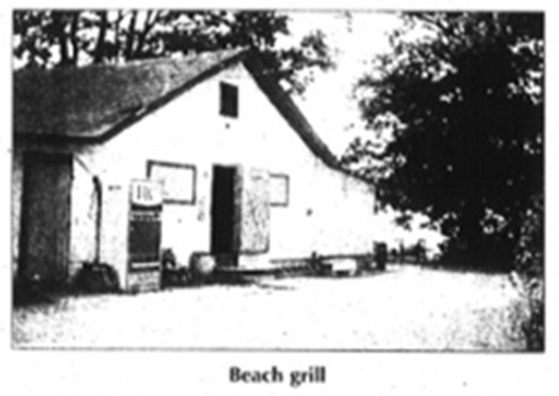
The best-documented Chitlin’ Circuit site on the Neck is Churchill’s Beach, also known as Church Hills Beach, near Whitestone in Lancaster County. Its story begins in 1947, a year that stood at the very center of the post-World War II moment for African Americans.
A Postwar Year of Possibility
Black veterans were coming home from a war fought against fascism abroad, only to meet segregation on their own front porches. Many returned with savings, new skills, and an unwillingness to accept the old limits quietly. The late 1940s saw a surge of Black entrepreneurship, voter registration drives, and legal challenges that would lead, within a decade, to Brown v. Board of Education. (See the Appendix below). Building a resort in 1947 belonged to that same spirit: if the doors of leisure were closed, Black Virginians would build their own doors.
The Churchill Brothers
Churchill’s Beach was founded by four brothers, Harry, John, Elwood and Lawrence (the last affectionately known as “Lacy”), sons of Clarence and Helen Churchill. Together they purchased the property and transformed it into a Black-owned resort, dance club and hotel. It was a family enterprise in the fullest sense: a business, but also an investment in the dignity and pleasure of their neighbors.
This was no flash in the pan. For more than thirty years Churchill’s was the place to go, and its beach remained open to public access until 1980. Its stage hosted artists who were barred from mainstream white venues, among them James Brown, Etta James, Gladys Knight and The Temptations. Its crowds were local farmers, watermen, oyster shuckers, domestic workers and teachers, joined each summer by visitors driving down from Baltimore, Philadelphia and New York.
Imagine the Heyday
Picture a Saturday night in July. The day’s work at the canneries and on the water is done. Cars with Maryland, Pennsylvania and New York plates line the lane alongside local pickups. Children who spent the afternoon in the river have been scrubbed and sent to bed at a cousin’s house. In the dining room there is fried fish, crab, potato salad, and yes, perhaps chitlins. Women in summer dresses and men in pressed slacks make their way toward the music. A band counts off, the floor fills, and for a few hours the rules of the outside world have no power here.
That is the essential culture of the Chitlin’ Circuit: not only great music, but a protected space in which Black people could be fully themselves, could dress up, court, laugh, argue about the band, and go home tired and happy.
Churchill’s Today
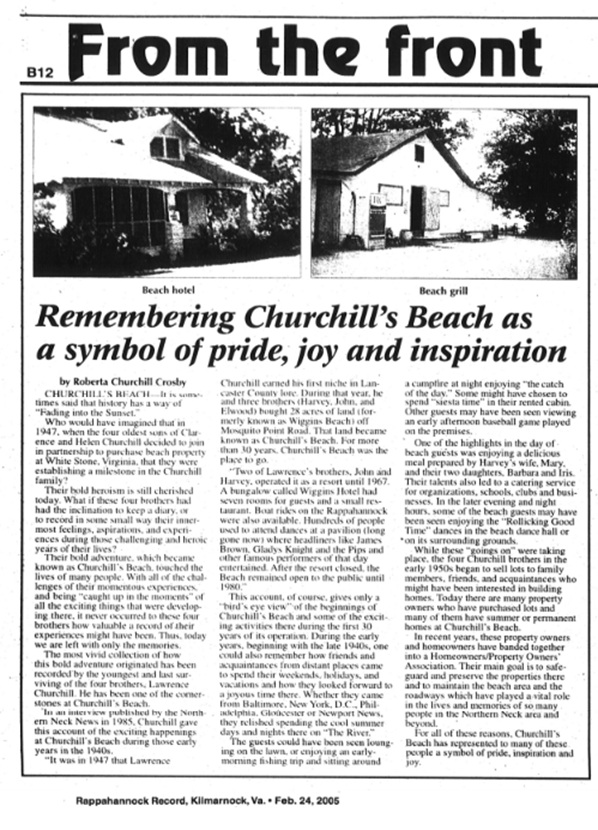
The original hotel and restaurant are gone. The land remains, now private property with beachfront homes governed by a property owners’ association, a transition the Rappahannock Record chronicled in February 2005. Visitors should respect that privacy. Yet the site’s meaning is not diminished by its change of use. Like many Black resorts after integration, Churchill’s faded not because it failed but because its patrons finally had other choices. Integration, ironically, dissolved the very economy that segregation had forced into being.
IV. The Wider Northern Neck Landscape
Churchill’s Beach was the headline, but it was never alone. Across Lancaster, Northumberland, Richmond, Westmoreland and King George counties, the circuit’s culture lived in a constellation of smaller places that rarely made the newspapers:
- Lodge halls and community halls. Fraternal orders such as the Masons, the Elks and benevolent societies owned halls that doubled as dance floors on weekend nights. They were the backbone of rural Black social life.
- Roadside clubs and juke joints. Along the county roads, modest buildings with a jukebox, a kitchen and a few tables served as gathering places between big shows, and sometimes hosted touring bands passing between larger engagements in Richmond, Norfolk and Washington.
- Schools and churches. Black schools, among them the Rosenwald-era and county training schools of the region, hosted concerts, talent shows and fundraising dances. Churches nourished the gospel tradition from which so many circuit singers came.
- Workplaces. The canneries, menhaden fisheries and oyster houses of the Neck supplied both the audience and the wages that filled the dance floors. The circuit was, in a real sense, the weekend face of the working waterfront.
- Host homes. Because hotels were closed to them, touring musicians often slept in private homes. Many Northern Neck families still tell stories of a famous singer who once ate at Grandmother’s table.
Many of these places are undocumented, unmarked, or already lost. Identifying them is one of the most urgent tasks for anyone who cares about this history.
V. The Circuit in Art and Memory
Art has a way of imitating this life, and several films help us imagine what places like Churchill’s felt like. The Inkwell (1994), directed by Matty Rich, is a coming-of-age story set in 1976 among Black vacationers at Oak Bluffs on Martha’s Vineyard; it captures the multigenerational joy of a Black summer community in its own cultural safety net – see APPENDIX VIDEO below. Documentaries extend the picture: Charlie’s Place (2009) recounts a Black nightclub and motor court in Myrtle Beach, South Carolina, where Billie Holiday, Ray Charles and Little Richard played before the Ku Klux Klan attacked it in 1950; films on Carr’s and Sparrow’s Beach preserve the Annapolis story; and Florida Chitlin’ Circuit: Where the Legends Came to Play (2026) traces safe-haven venues in the Sunshine State.
Those stories also carry a warning. Charlie’s Place reminds us that Black joy in this era was never free of danger. The resorts were refuges precisely because the world outside was hostile, and owners like the Churchills took real risks to create them.
VI. Good Old Days or Bad Old Days?
Both, and that is the point. The era of the Chitlin’ Circuit was defined by injustice: segregated shores, closed hotels, and the constant labor of navigating a system designed to diminish. And yet out of that injustice came institutions of extraordinary creativity and resilience. The music that grew up on these stages, rhythm and blues, soul, and the roots of rock and roll, went on to remake American culture.
To remember the circuit honestly is to hold both truths at once: grief for what was denied, and pride in what was built anyway. In the Northern Neck, we call that simply the Olden Days.
VII. Legacy and Preservation
The Northern Neck Hidden History Trail exists so that this history is not left to fade with the last generation who danced at Churchill’s. Preservation here means several things:
- Gathering oral histories. Much of the circuit’s history was never written down. Recording the memories of elders, their stories of performers, recipes, songs and journeys, is the single most valuable step any of us can take.
- Collecting artifacts. Posters, ticket stubs, photographs, menus and newspaper clippings sitting in attics and family Bibles are primary sources. Scanning and sharing them keeps them safe.
- Marking the sites. Interpretive signage and inclusion on heritage trails, now strengthened by the 2023 designation of the Northern Neck National Heritage Area, can place these stories in the public landscape alongside the more familiar ones.
- Celebrating, not just commemorating. The Chitlin’ Circuit was about joy. Concerts, dances and community gatherings that honor this music carry the tradition forward in the spirit it was created.
See more in this VIDEO – From the Chitlin Circuit to James Brown: The Musical Evolution of Churchill Beach – https://youtu.be/MVDR7pXu2aU?si=SYTIIJOEYQlNXF5N&t=147
From the Chitlin Circuit to James Brown: The Musical Evolution of Churchill Beach
VIII. Conclusion
Stand near the water at Whitestone on a summer evening and listen. The hotel is gone and the bandstand is silent, but the river is the same river that carried the music out across the dark in 1955. The Churchill brothers, and the many unnamed hosts, cooks, promoters and dancers of the Northern Neck, built something lasting: proof that a community denied the shoreline could claim it, and fill it with song.
Good Old Days? Yes, indeed. Across the Northern Neck, history, heritage and community intersect, and the music is still waiting to be remembered.
🙂
Appendix A – Selected Sources
- Northern Neck Hidden History Trail, “Churchill’s Beach: A Legendary Stop on the Chitlin’ Circuit” and Trail Sites listings, nnkhiddenhistorytrail.org.
- Rappahannock Record, article on Churchill Beach history, February 2005.
- Smithsonian National Museum of African American History and Culture, “A History of Black Beaches and Amusement Parks.”
- National Trust for Historic Preservation, “Exploring the Chesapeake Bay’s Unsung Black History” (2025).
- National Park Service, Northern Neck National Heritage Area.
Appendix B VIDEO – The Inkwell – https://youtu.be/o-1YuAGU8hA?si=bytbYe2zTlHokEAz
Appendix C – Learning Box
| Learning Box: Blacks in the Immediate Aftermath of WWII |
| “War … what is it good for?! Absolutely nothing. Say it again …” – Song Lyrics by R&B Singer Edwin Starr Motown 1969. Wonderful song! Excellent to dance to … … but not historically accurate. War has been good for transforming society. Consider these happenstances, these War Conflicts: Napoleonic Wars | 1803 – 1815 Spanish New World assumed independence from Spain. This was true in North America (Mexico), Central America and South America. Take-a-way: Latin America Independence American Civil War | 1860 – 1865 Great War / World War I | 1914 – 1919 World War II / Cold War | 1939 – 1955 End of Cold War | 1991 – 2016 In no shape or form are we rationalizing, justifying or excusing war. But human experience is irrefutable, it is only at the precipice that people change. (Think of how many long-term cigarette smokers that only quit after they get a cancer diagnosis). Video – 1947 Anti-fascist film – https://www.youtube.com/watch?v=x5vL7l6XBYI&t=8s |